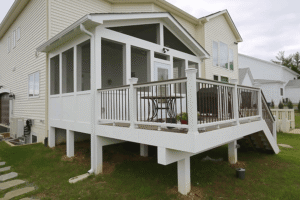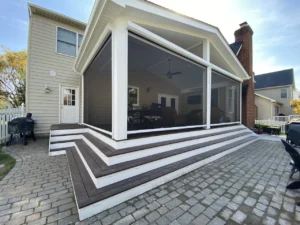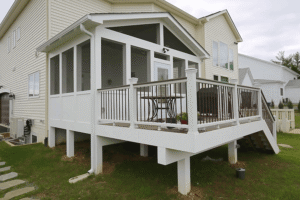
If your deck is going to be a gathering place for kids, dogs, guests, and everyday family life, choosing the right material matters. The best decking for dogs and children should be durable enough to handle frequent foot and paw traffic, easy to maintain, and comfortable for everyone who uses the space.
Composite decking is one option worth considering for busy households because it can provide durability and lower maintenance than traditional wood.
If you’re planning a new family-friendly deck in Northern Virginia, contact Sunburst Construction online or at 703-406-0914 to discuss your decking options and request a consultation.
What Makes the Best Decking for Dogs and Children?
A deck used by an active household experiences more wear than one that is only occasionally used. Dogs may run across the surface, turn sharply, drag toys, and repeatedly travel between the yard and the house. Children can spill drinks, drop food, move toys and furniture, and spend hours playing outside.
When comparing dog-friendly decking materials, look for characteristics that fit the way your household actually uses the space.
Important considerations include:
- Durability: The surface should be designed for frequent outdoor use.
- Scratch resistance: A scratch-resistant surface can help minimize visible wear.
- Stain resistance: Spills, mud, food, and pet messes are easier to manage when the decking resists staining.
- Low maintenance: Busy families can benefit from spending less time sanding, staining, and sealing.
- Moisture resistance: Decking should be appropriate for exposure to rain, humidity, and changing weather.
- Traction: The surface and deck design should be considered carefully when the boards become wet.
- Comfort: Direct sunlight and surface temperature are especially important when children and pets spend significant time outdoors.
No decking material is completely indestructible or maintenance-free. However, choosing a material based on your household’s traffic, pets, children, and maintenance preferences can help create a deck that works better for everyday life.
Best Decking for Dogs and Children: Why Composite Decking Is Popular
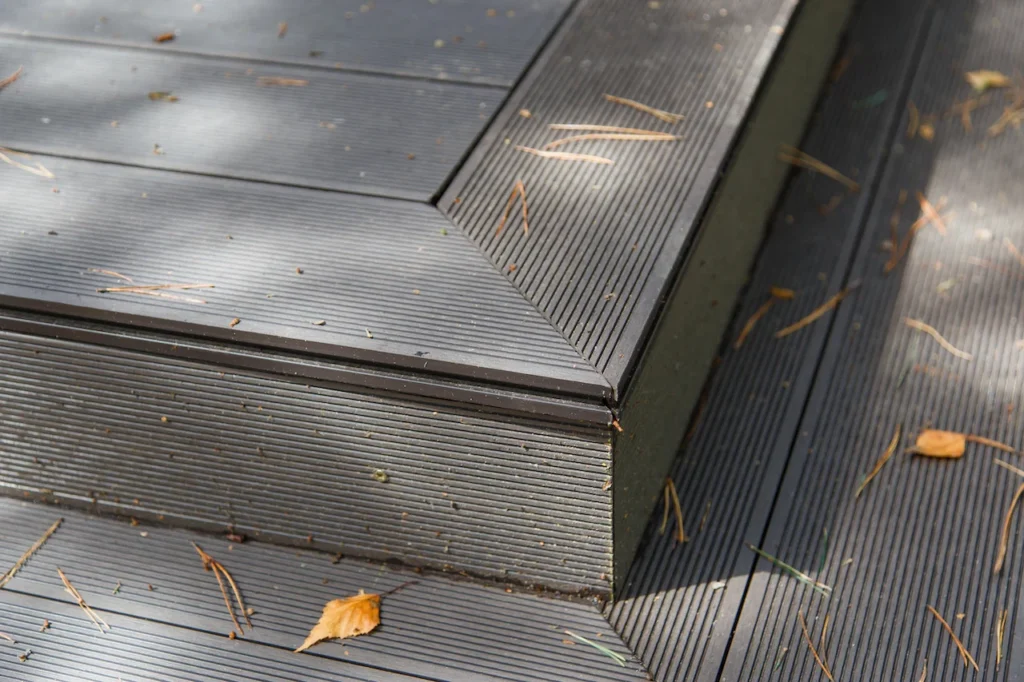
Composite decking is a popular choice for homeowners who want a durable outdoor living surface without some of the ongoing maintenance associated with traditional wood.
Composite products are manufactured using combinations of wood fibers and polymers or other synthetic materials, depending on the product. Sunburst’s guide to Trex composite decking explains how composite decking differs from traditional wood and why homeowners choose it for outdoor living spaces.
For families, composite decking can be particularly appealing because many products are designed to resist issues associated with aging wood, such as rotting and splintering. The specific performance characteristics vary by manufacturer and product line, so it is important to compare the actual products you’re considering.
Composite Decking for Dogs Can Handle Everyday Activity
Dogs can be particularly hard on outdoor surfaces. Active dogs may run across the same areas repeatedly, while larger dogs can put considerable pressure on decking when they stop, turn, or jump.
That makes composite decking for dogs worth considering for homeowners who prioritize durability and reduced maintenance.
However, it is important not to assume that every composite product is completely scratch-proof. Different manufacturers and product lines use different surface technologies, and normal wear can still occur.
Keeping your dog’s nails trimmed can also help minimize scratching. The American Kennel Club recommends regular nail care and notes that excessively long nails can affect a dog’s gait and comfort.
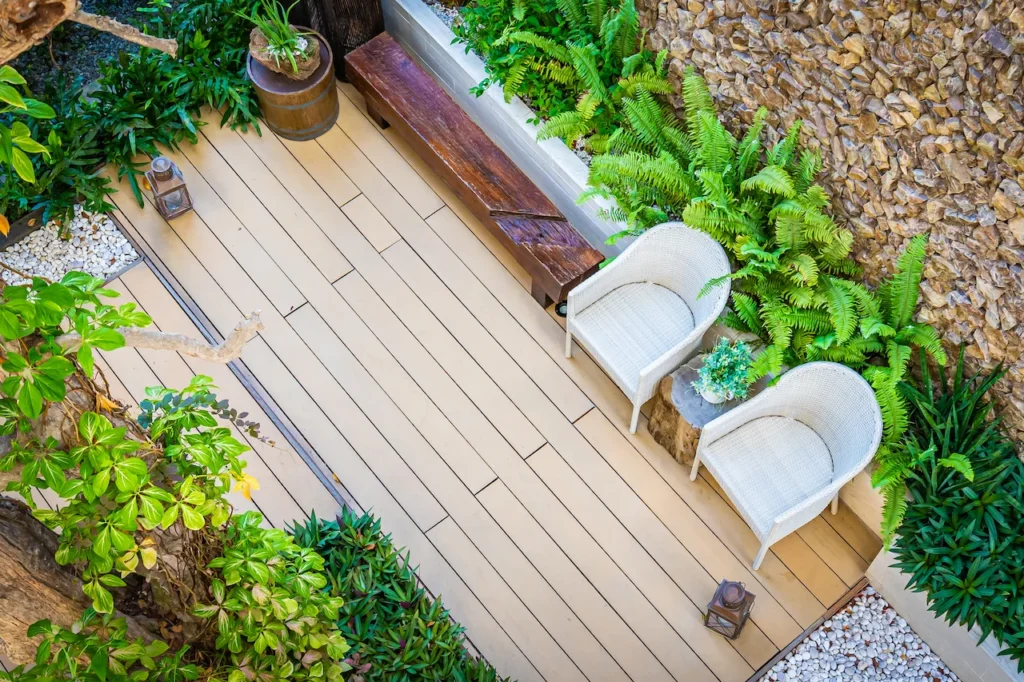
Scratch-Resistant Decking for High-Traffic Homes
If your household includes children, dogs, frequent guests, and outdoor furniture, scratches are a reasonable consideration when selecting high-traffic decking.
Deck surfaces can experience wear from:
- Dog claws
- Outdoor toys
- Patio furniture
- Grills
- Bicycles
- Mud and debris
- Frequent foot traffic
- Moving furniture for entertaining
Scratch-resistant decking can help reduce the appearance of some everyday wear, but no decking material should be treated as completely scratch-proof.
Trex, for example, offers decking products with different performance characteristics. Sunburst’s information on Trex Pro decking material discusses the material’s durability and resistance to common outdoor conditions.
When comparing decking products, ask about the specific collection rather than evaluating composite decking as one universal category.
Best Decking for Pets: Why Maintenance Matters
A busy household may not have time for extensive deck maintenance every year.
Traditional wood decking can require periodic cleaning, staining, and sealing depending on the species, finish, exposure, and condition of the deck. Composite decking is generally selected in part because it requires less routine maintenance than many wood decking options.
That doesn’t mean composite decking requires no care. Dirt, leaves, mud, food, and pet messes should still be removed from the surface. Always follow the manufacturer’s cleaning recommendations for your particular product.
For homeowners considering TimberTech, Sunburst’s guide to TimberTech decking explains what TimberTech composite decking is made of and why homeowners consider it as an alternative to traditional wood.
Sunburst also provides information about TimberTech decking costs, including the different product lines homeowners may encounter when planning a project.
For families with dogs and children, lower routine maintenance can be a major advantage because it leaves more time for actually enjoying the outdoor space.
Family-Friendly Decking: Composite vs. Wood
Wood remains a popular decking material because of its natural appearance and traditional character. Pressure-treated lumber, cedar, and other wood species can all be used to create attractive outdoor spaces.
Composite decking offers a different combination of characteristics. It is designed to provide the appearance of wood while reducing some of the maintenance associated with traditional wood.
| Feature | Composite Decking | Wood Decking |
| Routine maintenance | Generally lower | Generally higher |
| Splintering | Designed to resist splintering | Can splinter as wood ages |
| Rot resistance | High for many products | Varies by species and maintenance |
| Appearance | Many colors and finishes | Natural wood appearance |
| Staining/sealing | Generally not required | Often required |
| Pet-friendly use | Durable option for active households | Can work well with proper maintenance |
| Upfront cost | Typically higher | Varies by material |
| Long-term maintenance | Generally lower | Can be higher |
The right choice depends on your budget, design goals, maintenance preferences, and how heavily the deck will be used.
Trex vs. TimberTech for a High-Traffic Deck
Trex and TimberTech are two composite decking brands homeowners may consider when planning a new deck.
Sunburst works with both products, allowing homeowners to compare specific materials and design options based on their project.
Trex for Busy Outdoor Spaces
Trex offers multiple decking collections with different colors, appearances, and performance characteristics.
Sunburst’s Trex composite decking guide provides an overview of Trex decking and its benefits, including its durability and lower-maintenance characteristics.
For a family deck, these considerations can be important because the decking material is only one part of the finished outdoor space.
TimberTech for Family-Friendly Decks
TimberTech offers several decking collections with different price points, colors, and product characteristics.
Sunburst’s TimberTech decking cost guide explains the different TimberTech product lines and factors that can influence the cost of a project.
Rather than asking whether one brand is universally better, compare the specific product, color, finish, maintenance requirements, and budget that fit your household.
Deck Safety Goes Beyond the Decking Material
Choosing the best decking for dogs and children is only one part of creating a family-friendly outdoor area.
The deck’s overall design also matters. Railings, stairs, lighting, access points, and the relationship between the deck and yard should all be considered during planning.
The American Wood Council provides residential deck construction resources addressing structural design and deck safety.
For families with young children, consider how children will access the deck and stairs and whether the railing design is appropriate for the project. The U.S. Consumer Product Safety Commission also provides child-safety guidance addressing fall hazards involving decks, balconies, and landings.
A professional deck builder can incorporate these considerations into the design from the beginning.
Consider Traction When Choosing Dog-Friendly Decking
Dogs aren’t the only ones who need a comfortable outdoor surface. Children running across a wet deck can also be vulnerable to slips.
No decking material should be assumed to be completely slip-proof. Rain, ice, snow, algae, dirt, and other conditions can affect traction.
When planning a family-friendly deck, consider:
- How much rain the deck receives
- Whether the deck is shaded
- How quickly water drains from the area
- Whether stairs are exposed to weather
- Where children and pets enter and exit
- How easily the surface can be cleaned
Proper drainage and regular cleaning are important parts of maintaining an outdoor living space.
Think About Heat When Choosing Decking for Dogs
If your dog spends a lot of time outside, the temperature of the deck surface deserves attention.
Dark-colored decking exposed to direct sunlight can become hot, particularly during warm summer weather. This is one reason homeowners should consider color and sun exposure when selecting decking.
Sunburst’s recent article on whether composite decking gets hot explains how color, material, direct sunlight, and shade can influence deck surface temperatures.
The American Kennel Club also warns that hot outdoor surfaces can burn dogs’ paw pads and recommends avoiding extremely hot surfaces during periods of high temperatures.
Consider incorporating shaded areas into your deck design through:
- Pergolas
- Covered deck sections
- Shade structures
- Umbrellas
- Landscaping
- Strategic deck orientation
A combination of shade and thoughtful material selection can make the outdoor space more comfortable for both people and pets.

Family-Friendly Deck Design Features to Consider
The decking boards are important, but the overall design can make an even bigger difference in how your family uses the space.
Create a Convenient Entry Area
If your dog regularly moves between the yard and deck, think about how the deck connects to the lawn.
An easy transition can make it simpler to clean muddy paws and shoes before everyone heads indoors.
Include Room for Movement
Avoid filling every square foot of your deck with furniture.
Dogs and children often need room to move, and an uncluttered layout can make the deck more functional for everyday activities.
If your backyard is smaller, Sunburst’s guide to deck layouts for small backyards includes ideas for using space efficiently, including open layouts, deck-and-patio combinations, and built-in seating.
Think About Seating Zones
Separate seating areas can help adults relax while children play nearby.
Depending on your available space, you could include:
- Dining space
- Lounge seating
- Built-in benches
- A grilling area
- An outdoor kitchen
- Open space for children and pets
Plan Your Railings Carefully
Railings are both a design element and an important component of an elevated deck.
Sunburst’s article about Trex railings discusses how railing systems can contribute to the appearance and functionality of an outdoor living space.
How to Choose the Best Decking for Your Household
There isn’t one decking material that is perfect for every family. Instead, start by thinking about how your household will actually use the deck.
Ask yourself:
- How many people will regularly use the deck?
- Do you have one dog or several?
- Are your pets particularly active?
- Will children use the deck as a play area?
- How often will you entertain?
- Will the deck hold heavy furniture or a grill?
- How much maintenance are you willing to perform?
- Does the deck receive direct afternoon sunlight?
- Is scratch resistance a major concern?
- What is your overall project budget?
Your answers can help narrow down the decking materials and design features that make sense for your home.
What About an Existing Deck?
If you’re replacing an aging deck instead of building a new one, you may have another option to consider.
In some situations, an existing deck can be resurfaced rather than completely rebuilt. In others, structural deterioration may make replacement the better approach.
Sunburst’s recent guide to deck resurfacing vs. replacement explains why the condition of the framing, posts, beams, joists, ledger, stairs, railings, and foundation all need to be evaluated before deciding how to proceed.
If you’re considering replacing the surface with composite decking, the existing structure should be evaluated to make sure it is suitable for the new material.
The Best Decking for Dogs and Children Starts With the Right Design
The best decking for dogs and children isn’t simply the material that looks best in a product sample. It is the combination of decking material, construction, layout, maintenance requirements, safety features, and outdoor conditions that fits your household.
For many busy families, composite decking is worth considering because of its durability, lower maintenance requirements, and variety of colors and styles. Trex and TimberTech both offer options that can be evaluated according to the specific needs of your project.
Most importantly, think beyond the decking boards. A well-designed family deck should give children room to play, pets room to move, adults room to relax, and everyone a comfortable place to spend time outdoors. Sunburst Construction is a family-owned, Class A licensed contractor serving Northern Virginia and offers custom deck design and installation.
Ready to create a durable outdoor space for your family, pets, and guests? Contact Sunburst Construction at 703-406-0914 or request a free estimate to discuss your custom deck project in Northern Virginia.
FAQ: Best Decking for Dogs and Children
What is the best decking for dogs and children?
Composite decking is a popular choice for families with dogs and children because it is durable, low-maintenance, and available in surfaces designed to resist staining and everyday wear. The best option depends on factors such as scratch resistance, sunlight exposure, traction, and how heavily the deck will be used.
Is composite decking good for dogs?
Yes. Composite decking for dogs can be a practical choice because it does not splinter like wood and generally requires less maintenance. However, composite decking is not completely scratch-proof, so homeowners with active dogs should compare the scratch-resistance characteristics of specific products.
What is the most durable decking for high-traffic areas?
Composite decking is commonly considered for high-traffic decking because it is designed to withstand frequent use while requiring less routine maintenance than many traditional wood decks. The durability of individual products varies, so homeowners should compare manufacturers and decking lines before choosing a material.
Does composite decking scratch easily from dogs?
Composite decking can be scratched by dogs, furniture, and other objects, but the severity depends on the specific product and its protective surface. Homeowners looking for scratch-resistant decking should compare the manufacturer’s published performance information and choose a product appropriate for their household’s activity level.
Is composite decking safer for children than wood decking?
Composite decking can be a family-friendly option because quality composite boards are designed to resist splintering, which can be a concern with aging wood decking. However, overall deck safety also depends on proper construction, railings, stairs, lighting, maintenance, and compliance with applicable building codes.