Is your deck starting to look worn, faded, or damaged? Before you assume you need an entirely new structure, it is worth understanding the difference between deck resurfacing vs replacement.
In some cases, replacing worn deck boards and updating the surface can give an existing deck a refreshed appearance without rebuilding the entire structure. In other situations, significant deterioration, structural damage, an outdated layout, or safety concerns may make a complete deck replacement the more appropriate solution.
The right choice depends on more than how old your deck looks. The condition of the framing, posts, beams, joists, ledger, stairs, railings, and foundation all matter. Sunburst Construction has more than 25 years of experience helping Northern Virginia homeowners create and improve outdoor living spaces.
If you are unsure whether your deck needs resurfacing or a complete replacement, contact Sunburst Construction at 703-406-0914 to discuss your project and request a consultation.
Deck Resurfacing vs Replacement: What Is the Difference?
The simplest way to understand deck resurfacing vs replacement is to think about the difference between updating the visible portions of a deck and rebuilding the underlying structure.
Deck resurfacing generally involves removing worn deck boards and installing new decking over an existing structural frame that is still suitable for continued use. Depending on the project, homeowners may also update railings, stairs, trim, or other visible components.
Deck replacement involves removing the existing deck, or substantial portions of it, and constructing a new structure. This can provide an opportunity to change the deck’s size, layout, height, materials, stairs, railings, and other features.
Neither option is automatically right for every homeowner. The most important question is whether the existing deck structure is sound enough to support the improvements you want to make.
What Does Deck Resurfacing Involve?
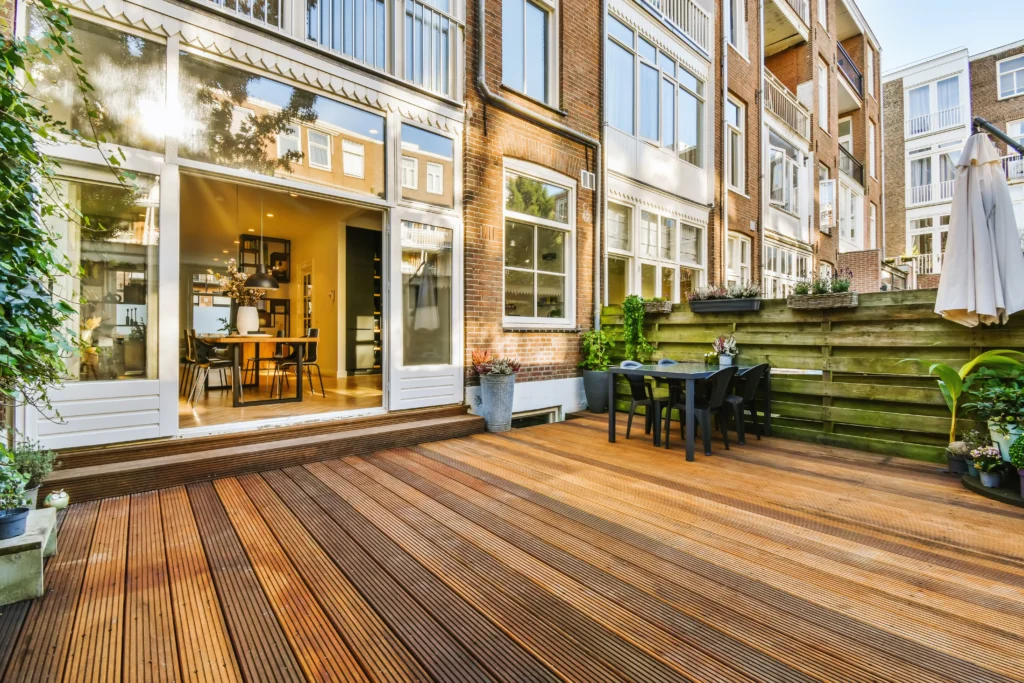
When resurfacing a deck, the existing decking surface is typically removed and replaced while the underlying structure is retained when it is in suitable condition.
A resurfacing project may include:
- Removing old or damaged deck boards
- Installing new deck boards
- Replacing selected damaged components
- Updating railings or stairs
- Changing the decking material
- Improving the appearance of the existing deck
- Adding compatible design features
For homeowners whose deck framing remains structurally sound, this approach can dramatically change the appearance of the outdoor space without starting completely from scratch.
The condition of the underlying structure should always be evaluated before assuming resurfacing is appropriate. The North American Deck & Railing Association recommends professional evaluation of older decks because deterioration can affect structural materials, fasteners, connectors, stairs, railings, and other components.
When Does Deck Resurfacing Make Sense?
One of the biggest advantages of deck resurfacing is that it can address an aging or unattractive surface while retaining a usable structure underneath.
Resurfacing may make sense when:
- The framing is structurally sound.
- The primary problems are with the deck boards.
- The deck layout still works for your household.
- The foundation and support system are in good condition.
- You like the existing size and location.
- You want to update the appearance without completely redesigning the space.
- You want to consider a lower-maintenance decking material.
For example, an older wood deck may have faded, weathered, or splintered boards while the underlying structure remains serviceable. In that situation, replacing the surface may provide a substantial visual upgrade.
It is important, however, not to confuse cosmetic deterioration with structural deterioration. Soft, decayed, cracked, or significantly damaged structural components require closer evaluation before new decking is installed.
Signs You May Need Deck Replacement Instead
Sometimes the surface is not the real problem. If the structural components underneath your deck have deteriorated, simply installing new boards may not address the underlying issue.
A deck replacement may be appropriate when you discover:
- Significant rot in posts, beams, joists, or other structural components
- Widespread deterioration rather than isolated damage
- Loose or unstable structural connections
- Serious problems around the ledger
- Damaged or inadequate footings
- Stairs that are structurally compromised
- Railings that cannot be safely secured
- A layout that no longer works for your needs
- Major drainage or water-management concerns
- A deck that needs substantial changes to its size or configuration
The age of a deck alone does not determine whether it needs to be replaced. A relatively old deck that has been properly maintained may be in better condition than a newer deck that has experienced prolonged moisture exposure or poor maintenance.
The key is to evaluate the condition of the structure rather than making a decision based solely on appearance.
How to Check for Structural Damage
Homeowners can look for obvious warning signs, but a professional evaluation is important when you have concerns about structural integrity.
Pay attention to:
Posts and supports: Look for visible deterioration, cracking, movement, or areas where water has caused damage.
Joists and beams: Check for signs of rot, splitting, severe cracking, or other deterioration.
Deck boards: Surface boards that are faded or worn are different from structural components that have become soft or unstable.
Fasteners and connections: Rusted, loose, or deteriorated hardware can affect the integrity of the structure.
Ledger area: The connection between the deck and the home is particularly important. Problems in this area deserve professional attention.
Stairs and railings: These components need to remain secure and stable. Loose railings or deteriorated stairs should not be ignored.
NADRA’s deck evaluation resources specifically identify stairs, footings, posts, beams, joists, ledgers, deck surfaces, handrails, and guards as areas that should be evaluated.
If you notice significant movement, deterioration, or instability, avoid assuming that new deck boards will solve the problem.
Deck Resurfacing vs Replacement: Compare the Major Factors
When comparing deck resurfacing vs replacement, consider the condition of the structure, your design goals, material preferences, and the overall scope of the project.
| Factor | Deck Resurfacing | Deck Replacement |
| Existing structure | Retained when suitable | Rebuilt or substantially replaced |
| Main purpose | Update the surface | Create a new deck |
| Deck boards | Usually replaced | Replaced as part of new construction |
| Layout | Generally retained | Can be redesigned |
| Structural work | Limited when framing is sound | More extensive |
| Design flexibility | Moderate | High |
| Material changes | Possible | Fully customizable |
| Best suited for | Sound structure with worn surface | Significant deterioration or major redesign |
This comparison is a starting point, not a substitute for an inspection or professional assessment. The actual scope of work depends on the condition of the existing deck and what you want the finished outdoor space to accomplish.
Consider the Deck Boards and Materials
The decking material you choose can also influence your decision.
If you are considering resurfacing a deck, replacing traditional wood boards with composite decking may provide a substantially different maintenance experience.
Composite decking is designed to provide a durable outdoor surface with less routine maintenance than many traditional wood decking options. Sunburst’s guide on what TimberTech is made of provides additional information about this type of decking material.
Homeowners considering a material upgrade can also review TimberTech decking costs to better understand the factors that can affect project pricing.
The right material depends on your appearance preferences, maintenance expectations, budget, and how you use the space.
Deck Replacement Gives You More Design Flexibility
A major reason homeowners choose deck replacement instead of resurfacing is that they want more than new deck boards.
A replacement project may give you the opportunity to rethink:
- Deck size
- Shape and configuration
- Stair placement
- Railing style
- Decking material
- Seating areas
- Outdoor dining space
- Lighting
- Covered areas
- Pergolas and shade features
- Outdoor kitchens or other entertainment features
If your current deck feels too small, awkwardly positioned, or poorly suited to how your family uses the backyard, replacing it can provide an opportunity to solve those problems rather than simply updating the existing surface.
Before changing the size or layout, consider your property, furniture, traffic flow, and intended use. Sunburst’s guide on choosing the right deck size covers several of these considerations.
How Much Does Deck Resurfacing vs Replacement Cost?
Cost is one of the first questions homeowners ask when comparing deck resurfacing vs replacement, but there is no single price that applies to every project.
The cost can be affected by:
- Deck size
- Deck height
- Structural condition
- Decking material
- Number of stairs
- Railing system
- Site access
- Foundation requirements
- Demolition and disposal
- Design complexity
- Permitting requirements
- Additional outdoor features
A resurfacing project may involve less structural work than a complete replacement, but that does not mean every resurfacing project will cost less. The existing structure may require repairs before new decking can be installed, and premium decking materials can also affect the total investment.
Sunburst’s deck pricing calculator can provide a starting point for understanding potential project costs. For an accurate estimate, however, the existing deck and property should be evaluated based on the specific project.
Deck Repair vs Resurfacing vs Replacement
It is also useful to distinguish deck repair from resurfacing and replacement.
A repair typically addresses a specific problem without replacing the entire surface or structure. For example, an isolated damaged board, railing component, or other limited issue may be repairable.
Resurfacing is more comprehensive because it generally involves updating much of the visible decking surface.
Replacement goes further by creating a substantially new deck structure and gives homeowners more opportunities to change the design.
Think of the three options this way:
- Repair: Fix a specific problem.
- Resurface: Replace or significantly update the deck surface while retaining an appropriate existing structure.
- Replace: Remove and rebuild the deck when the structure, design, or overall condition calls for a new system.
A professional assessment can help determine which category best matches your project.
Should You Resurface or Replace a Deck?
Ask yourself these questions before making a decision:
1. Is the Existing Structure Sound?
This is the most important consideration. If the framing, supports, connections, or foundation have significant deterioration, resurfacing may not be enough.
2. Do You Like the Current Layout?
If you like the deck’s size, shape, location, and overall configuration, resurfacing may be worth considering if the structure is suitable.
If the layout no longer works, replacement gives you greater flexibility.
3. Are You Mainly Concerned With Appearance?
Fading, worn deck boards, outdated colors, or an unattractive surface can potentially be addressed through resurfacing.
If the problems extend beneath the surface, a larger project may be necessary.
4. Do You Want Different Materials?
Replacing existing wood decking with a composite product can give an older deck a significantly updated appearance and maintenance profile.
5. Do You Want to Change the Way You Use Your Backyard?
If you want additional space for dining, entertaining, cooking, or relaxing, it may make more sense to redesign the deck rather than simply replace the boards.
Sunburst’s guide to outdoor entertainment spaces in Northern Virginia offers additional ideas for creating dedicated outdoor living areas.
Deck Replacement and Permits in Northern Virginia
If your project involves rebuilding or significantly modifying a deck, permitting requirements should be considered early.
Requirements vary by jurisdiction and project scope. For example, Fairfax County identifies decks as residential additions that require permits, and its current guidance lists decks among projects eligible for its residential Fast Track review program when they meet the applicable requirements.
A professional contractor can help homeowners understand the permitting and construction requirements that apply to their project.
For additional planning guidance, read what homeowners should know before building a deck, which covers design, materials, budgeting, permits, maintenance, and the construction process.
How to Decide Between Deck Resurfacing vs Replacement
Ultimately, the choice between deck resurfacing vs replacement comes down to three major questions:
- Is the existing structure sound?
- Does the current design still meet your needs?
- How extensive is the improvement you want to make?
If the structure is sound and you are primarily unhappy with the surface, resurfacing may be a practical way to give the deck a fresh appearance and updated materials.
If structural deterioration is widespread, the deck has safety concerns, or you want to substantially change its design, replacement may be the more appropriate approach.
The important thing is not to make the decision based only on the appearance of the deck boards. What is underneath the surface matters just as much.
Ready to Decide Between Deck Resurfacing vs Replacement?
Choosing between deck resurfacing vs replacement does not have to be a guessing game. The condition of the existing structure, your current layout, desired materials, budget, and long-term outdoor living goals should all factor into the decision. Whether your deck needs a refreshed surface or a completely new design, a professional evaluation can help you understand your options before construction begins.
Sunburst Construction has helped Northern Virginia homeowners create custom outdoor living spaces for more than 25 years. If you are considering resurfacing a deck, repairing an aging structure, or planning a complete deck replacement, call Sunburst Construction at 703-406-0914 or contact our team online to discuss your project and request a consultation.
Frequently Asked Questions About Deck Resurfacing vs Replacement
Is it cheaper to resurface or replace a deck?
The answer depends on the condition and size of the existing deck, the decking material, and the amount of structural work required. Resurfacing may involve less construction when the existing structure is sound, while replacement generally involves a more extensive scope of work.
Can you put new deck boards over an old deck?
New decking should not simply be installed over an existing surface without evaluating the structure underneath. The framing, joists, supports, fasteners, ledger, and other components should be suitable for continued use.
How do I know if my deck needs to be replaced?
Look for signs such as significant rot, structural deterioration, unstable railings or stairs, damaged supports, problems with the ledger, or widespread deterioration. A professional evaluation can help determine whether repairs, resurfacing, or replacement is appropriate.
Can I change my deck from wood to composite?
In many projects, homeowners can replace existing wood decking with a composite decking product when the underlying structure is suitable. The project should be evaluated to ensure the existing structure and installation plan are appropriate for the selected material.
How long does deck resurfacing take?
The timeline varies depending on deck size, material selection, structural repairs, design details, site conditions, and weather. A contractor can provide a more accurate timeline after evaluating the project.