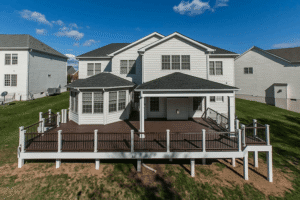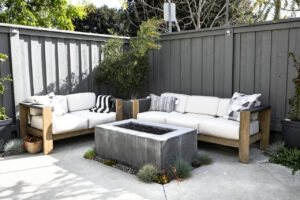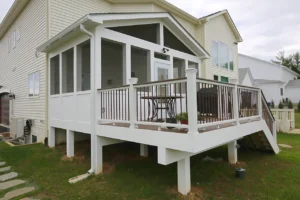
Building a deck is an exciting way to create more usable outdoor space, but there is more to the process than choosing a color and picking out furniture.
Knowing what to know before building a deck can help you make better decisions about design, materials, permits, budget, and long-term maintenance.
At Sunburst Construction, we’ve spent more than 25 years helping homeowners throughout Northern Virginia create custom decks and outdoor living spaces designed around their homes, lifestyles, and long-term needs. From choosing the right materials and layout to understanding permits, budgeting, and maintenance, our experienced team helps homeowners make confident decisions at every stage of the deck-building process.
This guide covers what to know before building a deck, including important planning considerations, material options, design features, permitting requirements, budgeting tips, and what to look for in a professional deck contractor.
Ready to start planning your new deck? Call 703-406-0914 or contact us online to discuss your project with the Sunburst Construction team and discover what’s possible for your outdoor space.
What to Know Before Building a Deck: Start With How You’ll Use It
Before thinking about materials or finishes, determine what you want your deck to accomplish.
Consider questions such as:
- Will you use the deck for outdoor dining?
- Do you want space for a grill or outdoor kitchen?
- Will you need room for lounge furniture?
- Do you want an area for children or pets?
- Will you entertain large groups?
- Would you like a covered or screened-in portion?
- Do you want stairs leading to a lower yard or patio?
Make a list of your must-have features and a second list of features that would be nice to have. This can help you prioritize your budget while giving your deck designer a clearer understanding of your goals.
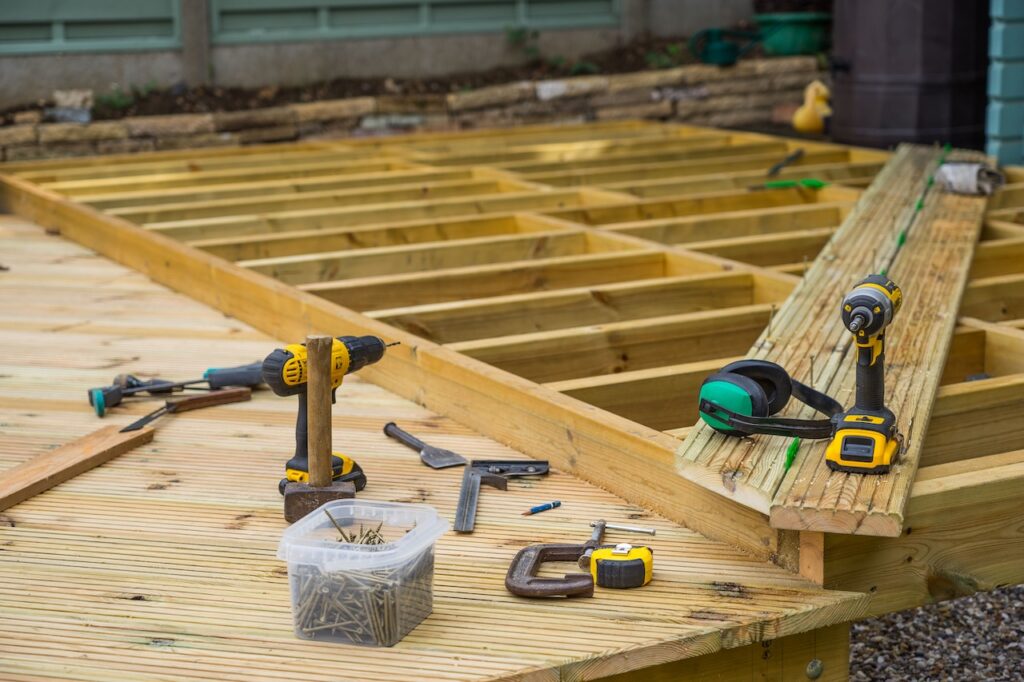
Choose the Right Deck Size and Layout
A bigger deck is not necessarily a better deck. The right size depends on your home’s architecture, yard, intended use, furniture, and budget.
For example, a deck that is large enough for a dining table may still feel cramped if there is not enough room for people to walk around the chairs. Similarly, a deck intended for entertaining may benefit from separate areas for cooking, dining, and relaxing.
Traffic flow matters, too. You should be able to move comfortably between your home, deck stairs, seating areas, grilling areas, and yard.
Think About Your Property Before Building a Deck
Your yard will influence the design and construction of your deck.
Slopes, existing landscaping, drainage patterns, mature trees, property lines, and the location of your home all need to be considered.
A sloped property may benefit from a multi-level deck, while a relatively flat yard may be better suited to a single-level design.
The deck should also complement your home’s architecture rather than look like an afterthought. A professional designer can help determine proportions, elevations, stair placement, railing styles, and other details that create a cohesive finished space.
Choose the Right Decking Material
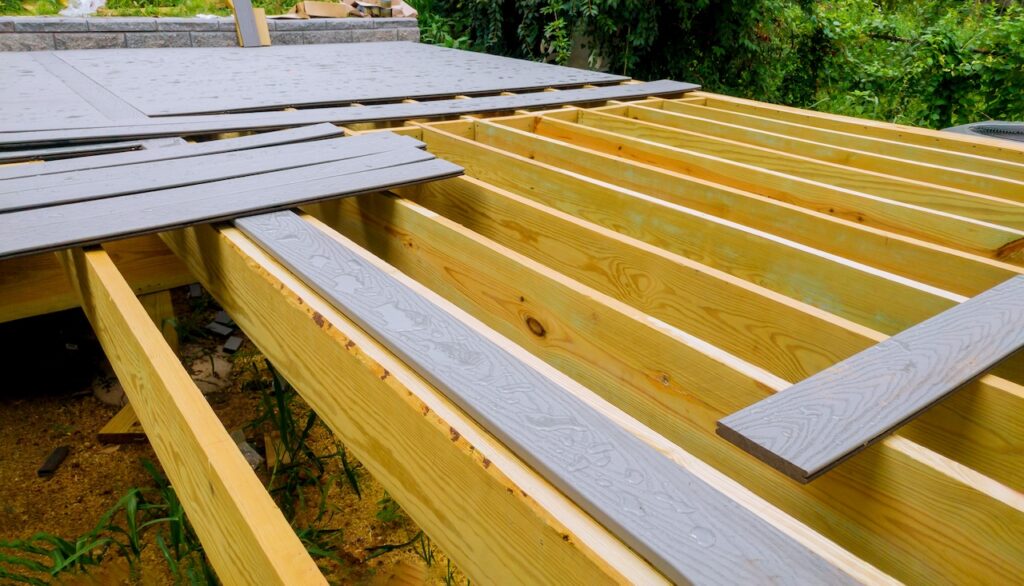
One of the biggest decisions homeowners make is choosing between wood and composite decking.
Traditional wood can provide a natural appearance and may have a lower initial material cost. However, wood requires ongoing maintenance and can be affected by moisture, insects, weather, and general wear over time.
Composite decking is another popular choice, particularly for homeowners who want a lower-maintenance outdoor living space. Composite boards are designed to resist common problems associated with traditional wood decking, including rotting and splintering.
Wood vs. Composite Decking: Which Is Better?
There is no single material that is right for every homeowner.
Wood may appeal to homeowners who prefer a traditional, natural appearance and are comfortable with regular maintenance. Composite may be a better fit for homeowners who want durability and less upkeep.
When comparing materials, look beyond the initial installation price. Consider:
| Feature | Wood Decking | Composite Decking |
| Appearance | Natural wood look | Wide range of colors and wood-like finishes |
| Maintenance | Requires regular maintenance | Generally lower maintenance |
| Moisture resistance | Varies by wood species and maintenance | Designed to resist moisture |
| Splintering | Can splinter over time | Typically won’t splinter like wood |
| Long-term upkeep | More frequent | Generally less frequent |
| Best for | Homeowners who prefer natural wood | Homeowners seeking lower maintenance |
The best choice depends on how much maintenance you want to perform and how you expect to use the deck.
Understand Permits and Building Codes
Permits are an important part of knowing what to know before building a deck. Requirements vary depending on where you live and the scope of your project.
For example, Fairfax County identifies decks as residential additions that require permitting, and the county notes that zoning considerations can include setbacks, easements, and the proposed location of an improvement.
If your project involves digging or disturbing the ground, utility locations should also be considered. Fairfax County advises contacting Virginia 811 before beginning land-disturbing activity.
A professional deck contractor can help identify applicable requirements and coordinate the permitting process.
Set a Realistic Deck Budget
The cost of building a deck depends on much more than square footage.
Your final investment can be influenced by:
- Deck size
- Height and structural requirements
- Decking material
- Number and design of stairs
- Railing material
- Site conditions
- Foundation requirements
- Lighting
- Built-in seating
- Covered areas
- Outdoor kitchens
- Privacy features
- Custom design elements
It is helpful to establish a budget before finalizing the design. Then you can determine which features provide the most value for your family.
Plan Railings, Stairs, and Safety Features Early
Railings and stairs are not just finishing touches. They are important functional and structural components of the deck.
Your deck’s height and design will influence stair placement and railing requirements. You should also consider how stairs connect the deck to the rest of your yard.
For families with children or pets, railing design can be particularly important. Homeowners may want to consider railing height, spacing, visibility, and how the railing complements the overall deck design.
Lighting is another feature worth considering during the planning stage. Integrated lighting can improve visibility around stairs and pathways while adding ambiance for evening entertaining.
Think About Shade and Weather Protection
Northern Virginia homeowners experience hot summers, rain, snow, and changing seasonal conditions. If you want to use your deck more consistently throughout the year, consider whether some form of weather protection makes sense.
Options may include:
- Covered deck areas
- Pergolas
- Screened porches
- Retractable shade solutions
- Outdoor lighting
- Comfortable seating areas
Planning these features at the beginning is often easier than trying to add them after the deck has already been constructed.
Choose an Experienced Deck Contractor
One of the most important decisions you will make is who builds your deck.
A deck may look straightforward from the outside, but construction involves structural considerations, material selection, drainage, foundations, stairs, railings, permitting, and building-code requirements.
When comparing contractors, look for:
- Proper licensing and insurance
- Experience with deck construction
- A portfolio of completed projects
- Positive customer reviews
- Clear estimates
- Written contracts
- Warranty information
- Knowledge of local permitting requirements
- A clear construction process
Do not choose a contractor based solely on the lowest estimate. A significantly lower price may not include the same materials, design services, structural work, warranties, or project management.

Understand the Deck-Building Process
Knowing what to expect can make the project feel much less overwhelming.
While every project is different, the process will generally involve several stages:
- Initial consultation – Discuss your goals, property, budget, and desired features.
- Design and planning – Develop a deck layout and select materials and features.
- Estimate and agreement – Review project costs, scope, materials, and contract details.
- Permitting – Obtain applicable permits and approvals.
- Site preparation – Prepare the construction area and address necessary grading or access considerations.
- Construction – Build the foundation, framing, decking, stairs, railings, and selected features.
- Final inspection and walkthrough – Review the completed project and address final details.
In Fairfax County, decks are among the residential projects eligible for the county’s Fast Track building plan review program when they meet the program’s requirements.
Your contractor should explain where your project falls within the process and what you can expect at each stage.
Plan for Long-Term Deck Maintenance
Before choosing your decking material, think about how much maintenance you are willing to handle.
Wood decks generally require more ongoing care, including cleaning and periodic staining or sealing depending on the material and finish. Composite decking typically requires less maintenance, although it still needs regular cleaning to keep it looking its best.
Regardless of material, homeowners should keep an eye out for:
- Loose or damaged boards
- Loose railings
- Damaged stairs
- Standing water
- Debris buildup
- Signs of moisture damage
- Structural deterioration
- Changes around posts or foundations
Regular attention can help you identify problems before they become larger repairs.
What to Know Before Building a Deck: Plan for the Future
A well-designed deck should work for your household today while leaving room for future needs.
Maybe you currently want a simple seating area but expect to add an outdoor kitchen later. Or perhaps you want to eventually install a pergola, screened porch, lighting, or additional outdoor features.
Planning those possibilities during the original design can make future improvements easier.
It is also worth thinking about how your deck fits into your property’s overall outdoor living space. A deck can work alongside a patio, pool, porch, gazebo, or outdoor kitchen to create a more complete backyard environment.
Ready to Build Your New Deck?
Knowing what to know before building a deck can help you avoid expensive surprises and create an outdoor space that fits your home, lifestyle, and budget. From choosing the right decking material to planning the layout, permits, railings, stairs, and long-term maintenance, thoughtful preparation makes the entire process easier.
If you’re ready to turn your backyard into a more functional outdoor living space, call 703-406-0914 or contact us online to schedule a consultation with Sunburst Construction. With decades of experience serving Northern Virginia homeowners, Sunburst can help you move from an initial idea to a professionally designed and built deck.
Frequently Asked Questions About Building a Deck
How long does it take to build a deck?
The timeline depends on the deck’s size, design complexity, materials, site conditions, permitting, weather, and contractor availability. A simple deck may take less time than a multi-level structure with stairs, covered areas, lighting, or outdoor features.
Do I need a permit to build a deck?
Permit requirements depend on your location and project. In Northern Virginia, many deck projects require permits. Fairfax County, for example, lists decks among residential projects requiring permits. Always confirm requirements with your local building department or work with a contractor who handles permitting.
Is composite decking worth the cost?
For many homeowners, composite decking can be worth considering because it generally requires less maintenance than traditional wood. However, the right material depends on your budget, preferred appearance, maintenance expectations, and long-term plans.
What should I budget for when building a deck?
Deck costs vary considerably based on size, materials, structural requirements, site conditions, stairs, railings, and additional features. Rather than relying on a generic price-per-square-foot estimate, request a project-specific estimate.
What should I look for in a deck contractor?
Look for licensing, insurance, experience, reviews, completed-project photos, clear contracts, warranties, and familiarity with local building requirements. A good contractor should also communicate clearly throughout the design and construction process.