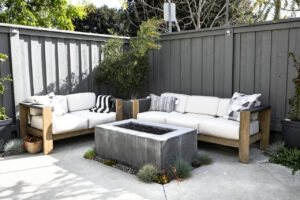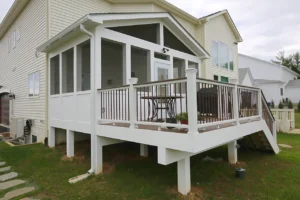
Choosing a patio material is an important part of planning a new outdoor living space. When comparing pavers vs. flagstone vs. poured concrete patios, homeowners have three distinct options that differ in appearance, installation, maintenance, flexibility, and cost. Understanding those differences can make it easier to choose a surface that works with your property and how you plan to use it. If you’re planning a patio in Northern Virginia, contact Sunburst Construction online or call 703-827-1205 to discuss your project and request a free estimate.
Pavers vs. Flagstone vs. Poured Concrete Patios: What Should You Compare?
Before choosing between a paver patio, flagstone patio, or concrete patio, consider more than the material’s appearance.
Your decision should account for:
- Appearance: Do you prefer a uniform manufactured look or natural variation?
- Installation: How will the material be installed over the existing site?
- Maintenance: How much cleaning and upkeep are you comfortable with?
- Durability: How will the material perform under normal foot traffic and weather?
- Repairs: How easy is it to address damage if it occurs?
- Drainage: How will rainwater move across and away from the patio?
- Design flexibility: Do you want curves, patterns, borders, or multiple colors?
- Budget: What is your initial project budget, and what maintenance costs could follow?
There is no single patio material that is right for every property. The best choice depends on your home’s architecture, site conditions, desired appearance, and how you expect to use the space.
Paver Patios: Flexible Design and Individual Units
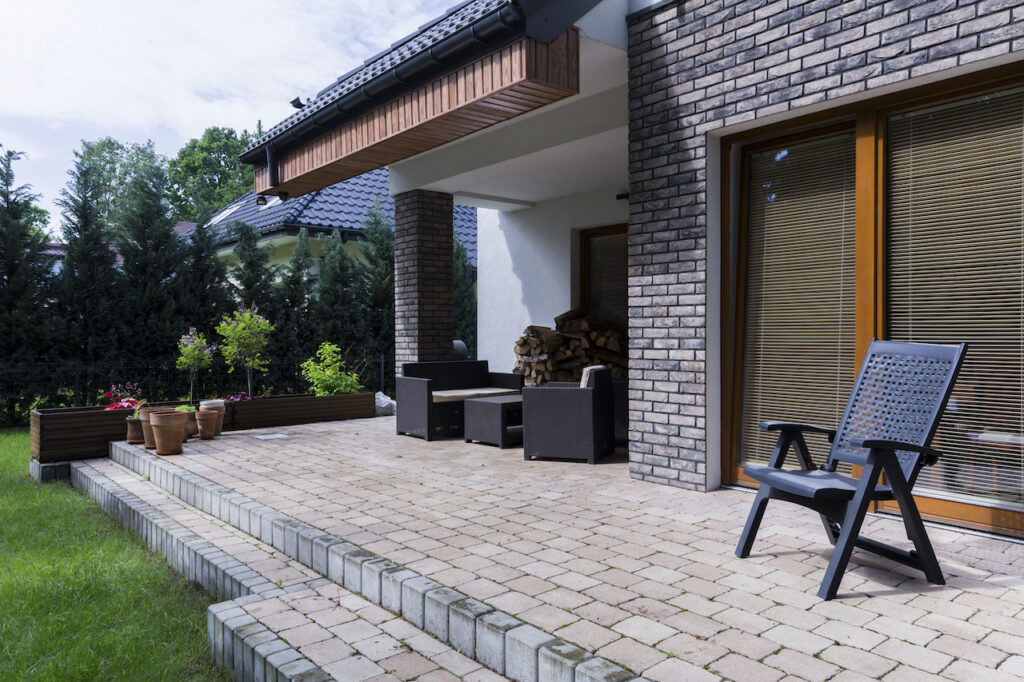
Pavers are manufactured individual units that are installed next to one another to create a patio surface. Depending on the product, pavers may be made from concrete, clay, or other materials and can come in numerous shapes, sizes, colors, and patterns.
One of the major advantages of a paver patio is design flexibility.
Benefits of Paver Patios
Pavers can offer:
- A wide variety of colors and patterns
- Defined borders and decorative accents
- The ability to replace individual units if necessary
- Flexible layouts for different patio shapes
- Options designed specifically for permeable paving
Because pavers are individual pieces rather than one continuous slab, repairs can sometimes be more localized. If one unit becomes damaged, it may be possible to remove and replace that individual piece rather than replacing the entire patio surface.
Pavers can also be installed as permeable systems. Penn State Extension explains that permeable pavers are designed with spaces and an underlying stone system that allow water to move through the surface and into the prepared base. Proper installation and maintenance are important for the system to function as intended.
Paver Patio Maintenance
A paver patio still requires maintenance.
Homeowners may need to:
- Sweep away leaves and debris
- Address weeds or organic growth
- Clean stains
- Inspect joints
- Replace damaged units
- Address areas that have shifted or settled
The amount of maintenance depends on the specific paver system, installation, surrounding landscaping, weather, and how heavily the patio is used.
Pavers can be particularly appealing when homeowners want a patio that can incorporate patterns and multiple design elements.
Flagstone Patios: A Natural, One-of-a-Kind Appearance
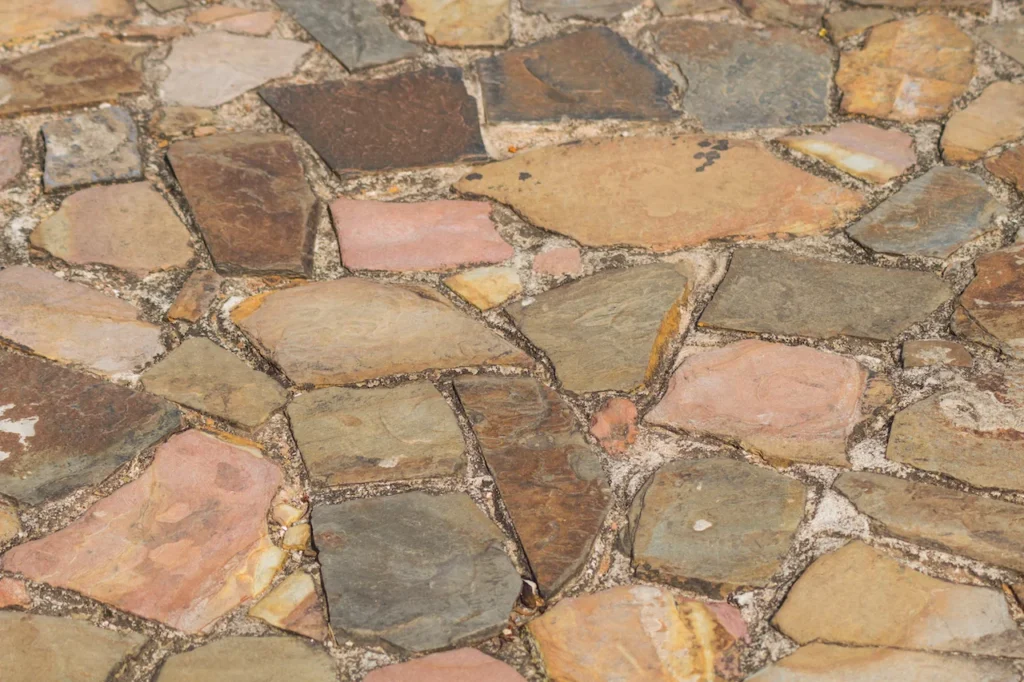
Flagstone is natural stone that is commonly used for patios, walkways, steps, and other outdoor applications. Unlike manufactured pavers, natural flagstone varies in color, texture, shape, and pattern.
That variation is one of the primary reasons homeowners choose a flagstone patio.
Rather than producing a perfectly uniform surface, flagstone can give a patio a more organic appearance that blends naturally with landscaping.
Benefits of Flagstone Patios
Flagstone can provide:
- Natural color variation
- Unique shapes and textures
- An organic appearance
- A strong connection to surrounding landscaping
- A custom look without relying on identical pieces
Natural stone also offers many aesthetic possibilities. The exact appearance depends on the species and type of stone selected.
However, homeowners should understand that natural variation is part of the material. If you want every piece to have a consistent color and shape, manufactured pavers or poured concrete may be a better fit.
Flagstone Patio Maintenance
Like other patio surfaces, flagstone requires care.
Natural Stone Institute recommends understanding the particular type of stone before selecting cleaning products because different stones have different compositions and sensitivities. The organization recommends appropriate, non-abrasive cleaning practices and notes that outdoor natural stone can require care for issues such as algae, moss, staining, and moisture-related deposits.
The joints between flagstones also deserve attention. Depending on the installation method, those spaces may contain jointing material, soil, or other materials that can require maintenance.
If you’re drawn to natural materials, flagstone can be a way to give your backyard a less uniform, more natural appearance.
Poured Concrete Patios: A Continuous, Versatile Surface
A concrete patio is poured as a continuous surface rather than assembled from individual units.
Poured concrete can provide a clean, consistent appearance and can also be customized through color, texture, stamping, and other finishing techniques.
The American Cement Association notes that concrete pavement contracts as it hardens, which is why properly designed contraction joints are used to control where cracking occurs.
Benefits of Concrete Patios
Poured concrete can offer:
- A clean, continuous appearance
- A variety of finish options
- Options for decorative colors and patterns
- A surface without individual paver joints
- Design flexibility for different patio layouts
- A familiar material for many residential applications
Concrete can also be finished in ways that mimic the appearance of other materials. Decorative concrete techniques can include coloring, texturing, stamping, scoring, and inlays.
Concrete Patio Maintenance
Concrete is durable, but that does not mean it is maintenance-free.
A homeowner may need to:
- Clean the surface periodically
- Address stains
- Monitor cracks
- Maintain joints
- Manage drainage around the patio
- Repair damaged areas when necessary
Concrete’s continuous nature can make repairs different from repairs to a paver patio. Instead of removing one individual unit, a repair may involve addressing a section of the slab.
Proper design and installation are important. The American Concrete Institute explains that joint design is used to help control random cracking in slabs-on-ground.
Pavers vs. Flagstone vs. Poured Concrete Patios: Side-by-Side Comparison
Each material has different characteristics, so it helps to compare them directly.
| Feature | Pavers | Flagstone | Poured Concrete |
| Appearance | Uniform, many colors and patterns | Natural and varied | Clean, consistent, customizable |
| Design flexibility | High | High | High |
| Natural appearance | Moderate to high | Very high | Moderate |
| Individual piece replacement | Generally possible | Possible depending on installation | Not applicable |
| Joint maintenance | Yes | Yes | Control joints instead |
| Color consistency | Generally consistent | Naturally variable | Can be controlled |
| Decorative options | Many patterns and borders | Natural shapes and layouts | Stamping, coloring, texturing |
| Permeable options | Available | Depends on system | Specialized porous concrete options exist |
| Maintenance | Moderate | Moderate | Moderate |
| Best fit | Flexible designs and patterns | Natural landscapes | Continuous or decorative surfaces |
This comparison is a starting point rather than a substitute for evaluating your specific site.
Pavers vs. Flagstone vs. Poured Concrete Patios: Which Costs More?
Cost is often one of the first questions homeowners ask when comparing patio materials.
However, there is no universal price for a paver patio, flagstone patio, or poured concrete patio.
Project cost can depend on:
- Total patio square footage
- Site preparation
- Existing surface removal
- Excavation
- Grading
- Drainage requirements
- Material selection
- Pattern complexity
- Borders and decorative details
- Accessibility of the property
- Labor
- Steps, retaining walls, or other features
Flagstone can vary significantly depending on the type and quality of stone selected and how it is installed. Pavers vary based on their material, size, pattern, and manufacturer. Concrete pricing can change depending on thickness, reinforcement, finish, coloring, stamping, and site preparation.
Because so many variables affect the final price, comparing materials solely by an advertised price per square foot can be misleading.
For a broader look at planning and budgeting outdoor projects, Sunburst’s guide to what to know before building a deck discusses how material choices, design, permits, and budget can affect an outdoor living project.
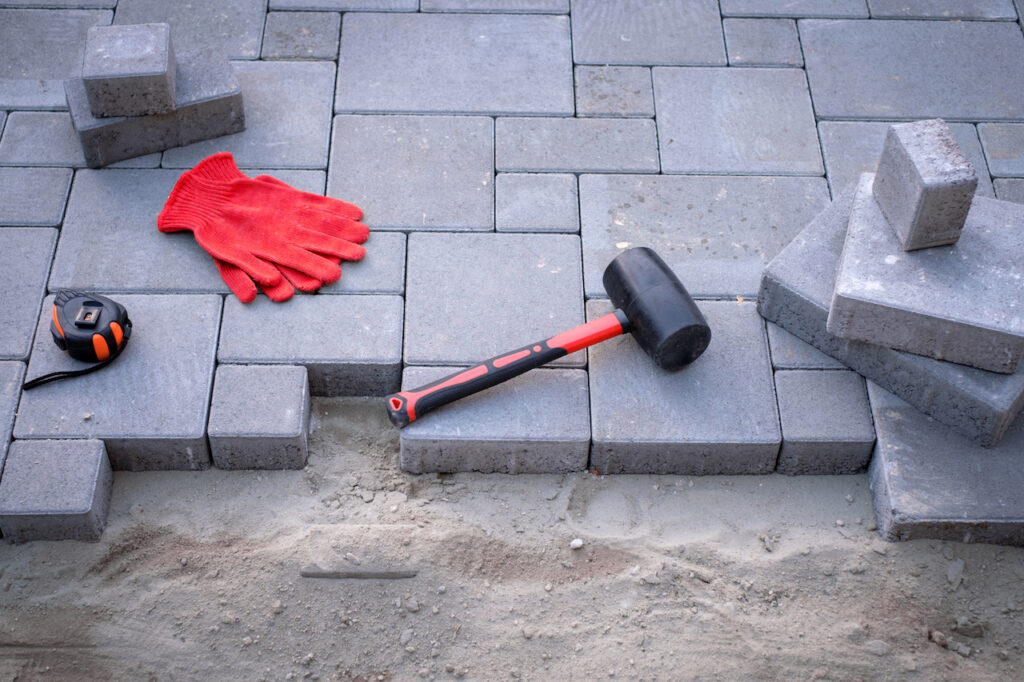
Patio Materials and Drainage: Why Site Preparation Matters
The material on top of your patio is only one part of the project.
Proper site preparation and drainage are also important.
Traditional concrete, stone, and many conventional paving surfaces can be impervious, meaning water cannot simply infiltrate through the surface. Penn State Extension explains that increasing impervious surface area can affect stormwater runoff and recommends considering permeable surfaces where appropriate.
Permeable pavers are one possible approach to managing runoff. However, they are not simply standard pavers installed with larger gaps. A functioning permeable system requires an appropriately prepared base and drainage design.
Your property’s slope and existing drainage should therefore be considered before selecting patio materials.
A professional patio designer can help determine how the new surface should interact with the rest of the yard.
Which Patio Material Is Most Durable?
All three options can provide a long-lasting patio when properly designed, installed, and maintained.
However, durability doesn’t mean exactly the same thing for every material.
Paver Patio Durability
Pavers are individual units, so the surface can be easier to modify or repair in sections. A properly installed paver system also depends heavily on the condition and preparation of the base beneath it.
Flagstone Patio Durability
Natural stone can be highly durable, but the specific characteristics depend on the type of stone and installation. The stone itself is only part of the system; the base, joints, drainage, and site conditions also affect performance.
Concrete Patio Durability
Concrete is a widely used durable construction material. The American Cement Association describes concrete as capable of long service life and notes that proper jointing helps control cracking.
For any material, installation quality and site preparation are critical.
Choosing Patio Materials Based on Your Design Goals
Instead of asking which material is universally best, start with how you want your patio to look and function.
Choose Pavers If You Want Design Flexibility
Pavers may be a good fit if you want:
- Multiple colors
- Decorative patterns
- Borders
- Individual pieces
- A more structured appearance
- Potential permeable-paving options
Pavers can also work well when you want to create visual zones within a larger outdoor living area.
Choose Flagstone If You Prefer Natural Variation
A flagstone patio may appeal to homeowners who want:
- Natural stone
- Irregular shapes
- Varied colors
- Organic textures
- A less manufactured appearance
Flagstone can complement gardens, natural landscaping, stone walls, and other organic elements.
Choose Poured Concrete If You Want a Continuous Surface
A concrete patio may be appropriate if you prefer:
- A consistent surface
- Clean lines
- Decorative stamping
- Integrated color
- A modern appearance
- Fewer individual pieces
Decorative concrete can also provide more visual variety than the basic gray slab many homeowners picture when they hear “concrete patio.”
Think About How Your Patio Connects to the Rest of Your Backyard
Your patio doesn’t have to be an isolated feature.
It can connect with:
- A raised deck
- Outdoor dining areas
- A pergola
- A gazebo
- Landscaping
- Outdoor kitchens
- Fire features
- Walkways
- A screened porch
Sunburst’s guide to designing an outdoor entertainment space emphasizes considering traffic flow, pathways, deck transitions, and furniture placement when designing an outdoor area.
Likewise, homeowners with smaller yards can look at deck layouts for small backyards for ideas about creating multiple functional areas without making the property feel crowded.
A patio can even be combined with a deck rather than forcing you to choose one or the other. Sunburst’s article on when to install a deck vs. a patio explains how factors such as grade, privacy, and intended use can influence that decision.
Patio Maintenance: What Homeowners Should Expect
No patio material is completely maintenance-free.
Your maintenance routine may include:
Pavers
- Sweeping
- Cleaning
- Joint maintenance
- Weed control
- Replacing damaged units
Flagstone
- Sweeping and cleaning
- Moss or algae removal
- Joint maintenance
- Appropriate stone-safe cleaning products
- Periodic inspection
Concrete
- Cleaning
- Stain removal
- Joint maintenance
- Crack monitoring
- Occasional repairs
Your patio’s environment matters, too. Overhanging trees can increase leaf accumulation, while poor drainage can contribute to moisture-related problems.
Sunburst’s patio maintenance guide for fall and winter recommends cleaning leaves and debris, storing items that should not remain exposed to winter weather, and inspecting the patio for damage before the season changes.
Patio Materials and Northern Virginia Weather
Northern Virginia experiences seasonal temperature changes, rainfall, humidity, and winter freezing conditions. Those factors should be considered when designing an outdoor surface.
Drainage is particularly important because water that remains in or beneath a patio can create problems when temperatures change.
The installation method matters just as much as the surface material.
This is why a professional should evaluate:
- Soil conditions
- Existing grade
- Drainage
- Patio elevation
- Nearby structures
- Landscaping
- Access to the work area
- The intended use of the patio
The goal isn’t simply to install attractive patio materials. It is to create an outdoor surface that works with the entire property.
Are Pavers, Flagstone, or Concrete Better for a Patio?
The answer depends on your priorities.
If you want a highly structured design with many pattern options, pavers may fit your goals.
If you prefer natural stone with organic variations, flagstone may be more appealing.
If you want a continuous surface with options for decorative finishes, poured concrete may be the better match for your design.
Your decision should also account for budget, maintenance, drainage, site conditions, and how the patio connects to your home’s overall outdoor living space.
Sunburst Construction can help homeowners evaluate those factors as part of a larger backyard design. The company has served Northern Virginia homeowners for more than 25 years and provides custom outdoor living services including patios, decks, porches, gazebos, and other outdoor features.
Build a Patio That Fits Your Northern Virginia Home
When comparing pavers vs. flagstone vs. poured concrete patios, the right choice comes down to more than appearance or initial price. Each material has different characteristics that can affect design flexibility, maintenance, repairs, drainage, and long-term use.
The best patio is one that fits your property, complements your home, and supports the way you want to spend time outdoors. If you’re ready to compare patio materials and plan an outdoor living space in Northern Virginia, call Sunburst Construction at 703-406-0914 or contact Sunburst Construction to request a free estimate.
FAQ: Patio Materials
What is the difference between pavers, flagstone, and poured concrete patios?
Pavers are individually manufactured units installed together, flagstone uses natural stone pieces with naturally varied shapes and colors, and poured concrete creates a continuous surface that can be customized with colors, textures, or patterns.
Is a paver patio better than concrete?
Neither material is universally better. Pavers offer individual units, pattern flexibility, and potential for localized replacement, while poured concrete provides a continuous surface with numerous decorative finish options. The right choice depends on your design goals, budget, site conditions, and maintenance preferences.
Is flagstone more expensive than pavers?
The cost of a flagstone patio compared with pavers depends on the stone selected, installation method, patio design, site preparation, and labor. A project estimate is more useful than assuming one material always costs more.
Which patio material requires the least maintenance?
All three require some maintenance. Concrete generally requires cleaning and monitoring of cracks and joints, while pavers and flagstone can require additional attention to joints and individual pieces. Maintenance requirements vary based on installation and site conditions.
Can pavers help with drainage?
Specially designed permeable pavers can allow water to pass through the surface into a prepared stone base. They require appropriate design, installation, and maintenance to function correctly. Standard pavers should not automatically be considered permeable.
Can flagstone be used for a large patio?
Yes. Flagstone can be used for patios of different sizes, although the appropriate stone, installation method, base preparation, and joint design should be selected based on the project.
Can concrete patios crack?
Concrete can develop cracks as it contracts and responds to environmental conditions. Properly designed contraction joints help control where cracking occurs rather than eliminating the possibility of cracking altogether.
Can a patio be combined with a deck?
Yes. A deck and patio can serve different purposes within the same backyard. A raised deck can provide an elevated outdoor living area, while a patio can create a ground-level space for dining, relaxing, or entertaining.