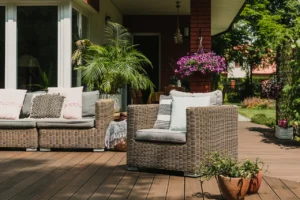
Does composite decking get hot when it sits in direct sunlight? Yes. Like many outdoor surfaces, composite decking can become hot on sunny summer days. However, how hot your deck feels depends on several factors, including the decking material, color, amount of direct sun, surrounding climate, and whether the space has shade.
If you are planning a new deck for a sunny backyard, these factors are worth considering before choosing your boards. The right combination of composite decking colors, materials, and shade features can make your outdoor space more comfortable while still giving you the low-maintenance appearance you want.
If you are planning a new deck in Northern Virginia, contact Sunburst Construction at 703-406-0914 to discuss your project and request a free estimate.
Does Composite Decking Get Hot in Direct Sun?
Yes, composite decking can get hot in direct sun, particularly during periods of high outdoor temperatures. This does not mean composite decking is unsuitable for sunny yards. It means homeowners should consider sun exposure and product selection when designing their outdoor space.
Trex, for example, explains that composite decking can become hot because of sunlight and hot weather and recommends considering climate, sun exposure, and deck color when selecting decking. Certain newer Trex products also use heat-mitigating technology designed to reduce heat buildup compared with standard boards.
The amount of heat you experience will vary from one deck to another. Two decks made from composite materials can have noticeably different surface temperatures because one may be a dark color in full afternoon sun while the other is a lighter color with partial shade.
For that reason, there is no single temperature that can be used to describe every composite deck.
Why Does Composite Decking Get Hot?
Understanding composite decking heat starts with understanding sunlight.
When sunlight strikes an outdoor surface, some of that solar energy is reflected while some is absorbed. Surfaces that absorb more solar energy generally become warmer.
Color plays an important role. In general, darker surfaces absorb more sunlight than lighter surfaces. The U.S. Department of Energy notes that the color and material of exterior surfaces can influence heat gain and that surface reflectance is an important consideration when evaluating how outdoor materials respond to sunlight.
Other factors affect how hot a deck becomes, including:
- Deck color: Darker boards can absorb more solar energy.
- Direct sunlight: A deck exposed to full sun for several hours can become warmer than a shaded deck.
- Outdoor temperature: A hot summer day can increase the surface temperature of outdoor materials.
- Time of day: Afternoon sun can be particularly intense depending on the orientation of the property.
- Shade: Trees, umbrellas, pergolas, and deck covers can reduce direct solar exposure.
- Material composition: Different decking products are engineered differently and can have different heat-management characteristics.
This is why choosing a deck for a sunny yard requires more thought than simply picking your favorite color from a sample.
How Do Composite Decking Colors Affect Heat?
One of the simplest factors homeowners can control is composite decking color.
Dark brown, charcoal, black, and other deep shades can absorb substantial solar energy when exposed to direct sunlight. Lighter shades generally reflect more sunlight, which can help reduce heat absorption.
This does not mean you have to avoid dark decking. A dark deck may be exactly what complements your home’s exterior. Instead, consider the amount of sun your deck receives and whether you can incorporate shade into the overall design.
What Are the Best Composite Decking Colors for Sunny Yards?
When heat is a major concern, light-colored decking is generally worth considering.
Potential options include:
- Light gray
- Soft beige
- Sand
- Taupe
- Light brown
- Cream or warm neutral tones
Trex currently recommends lighter options for hotter climates and full-sun applications, including lighter neutral shades in its heat-mitigating product collections.
However, color should not be the only consideration. A light-colored board in full, unobstructed afternoon sun can still become hot. Conversely, a darker deck beneath substantial shade may feel more comfortable.
Think about color and shade as two parts of the same design decision.
Does Decking Material Affect How Hot a Deck Gets?
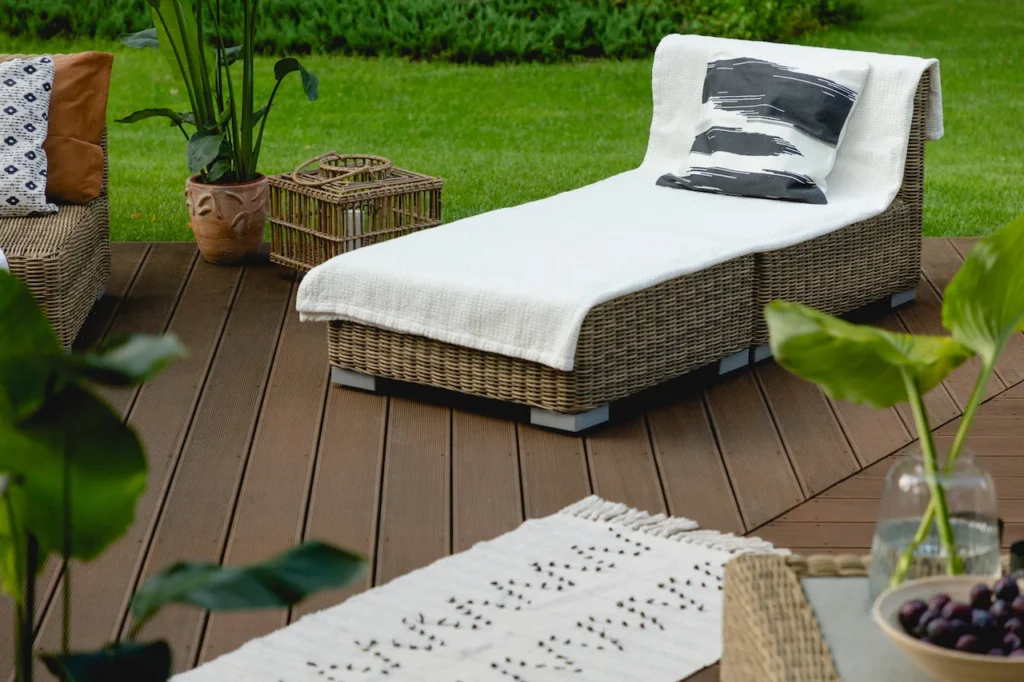
Yes. Composite decking materials differ in their construction, surface technology, color options, and heat-management characteristics.
Composite decking typically combines wood fibers or other wood-based material with polymers to create a durable outdoor surface. Sunburst’s existing guide explains that composite decking uses a wood fiber and polymer blend and discusses its durability and lower-maintenance characteristics compared with traditional wood.
However, “composite decking” is not one universal product. Different manufacturers and product lines can have different surface finishes and technologies.
Some products are specifically engineered to reduce heat buildup. Trex’s SunComfortable technology, for example, is designed to reflect solar energy and reduce heat absorption. Trex reports that its technology can reduce heat buildup by up to 35 degrees Fahrenheit compared with its original boards in specified laboratory testing. The company also emphasizes that actual temperatures vary based on environmental conditions, color, and use.
That distinction is important: heat-mitigating decking can reduce surface temperatures, but no decking product should be assumed to stay cool in intense direct sunlight.
Composite Decking vs. Wood for Sunny Yards
Homeowners often compare composite decking with traditional wood when planning a new deck.
Wood has a natural appearance and remains a popular decking material. However, it can require ongoing maintenance, including cleaning, staining, and sealing depending on the species and finish.
Composite decking is often selected because it provides a consistent appearance and requires less routine maintenance than many traditional wood decks. Sunburst’s existing composite decking guide highlights benefits including resistance to rotting, splintering, and warping.
When comparing materials for a sunny yard, don’t focus solely on whether one material “gets hot.” Surface temperature depends on the specific product, color, sunlight exposure, and environmental conditions.
Instead, consider the complete package:
- How much maintenance does the material require?
- What colors are available?
- How much direct sunlight will the deck receive?
- Can shade be incorporated into the design?
- How will the deck be used?
- Are children or pets likely to spend significant time on the surface?
- What appearance do you want?
- What is your project budget?
These questions can help narrow down the material and product that makes sense for your property.
How Much Sun Exposure Will Your Deck Get?
Before selecting composite decking for a sunny yard, pay attention to the position of your home and the path of the sun.
A backyard that looks partially shaded in the morning may receive direct sunlight for several hours in the afternoon. Trees can also change how much shade a deck receives throughout the year.
Consider where your deck will be located in relation to:
- Large trees
- The house
- Neighboring structures
- Fences
- Existing patios
- Landscaping
- Outdoor structures
Your deck’s orientation and surrounding features should be considered during the design stage rather than after construction.
How Can You Keep a Composite Deck Cooler?
If your backyard receives a lot of direct sunlight, material selection is only one part of the solution.
1. Choose Lighter Composite Decking Colors
Lighter colors can help reduce the amount of solar energy absorbed by the surface. If your deck receives full sun for most of the day, discuss lighter color options with your deck contractor.
2. Add a Deck Cover
A covered portion of your deck can provide valuable relief from direct sunlight. A roof, pergola, or other shade structure can also create separate zones for dining and relaxing.
3. Use Landscaping for Natural Shade
Trees and strategically placed landscaping can provide shade while making the backyard feel more connected to nature.
Keep in mind that mature trees should be evaluated carefully before relying on them for permanent shade. Their position, growth, roots, and maintenance requirements can all affect your deck design.
4. Create Separate Sun and Shade Zones
Not everyone uses a deck in the same way.
You might want a sunny area for morning coffee and a shaded area for afternoon meals. Designing your deck with different zones can make the space more versatile.
5. Consider Heat-Mitigating Decking Technology
Some manufacturers now offer products designed specifically to reduce heat buildup.
Trex’s current heat-mitigating decking technology is one example. According to Trex, these products are designed to stay cooler than its original boards under comparable conditions, although they can still become hot in direct sunlight.
Ask your contractor about the specific products available for your project rather than assuming every composite board performs the same way.
Does a Covered Deck Stay Cooler?
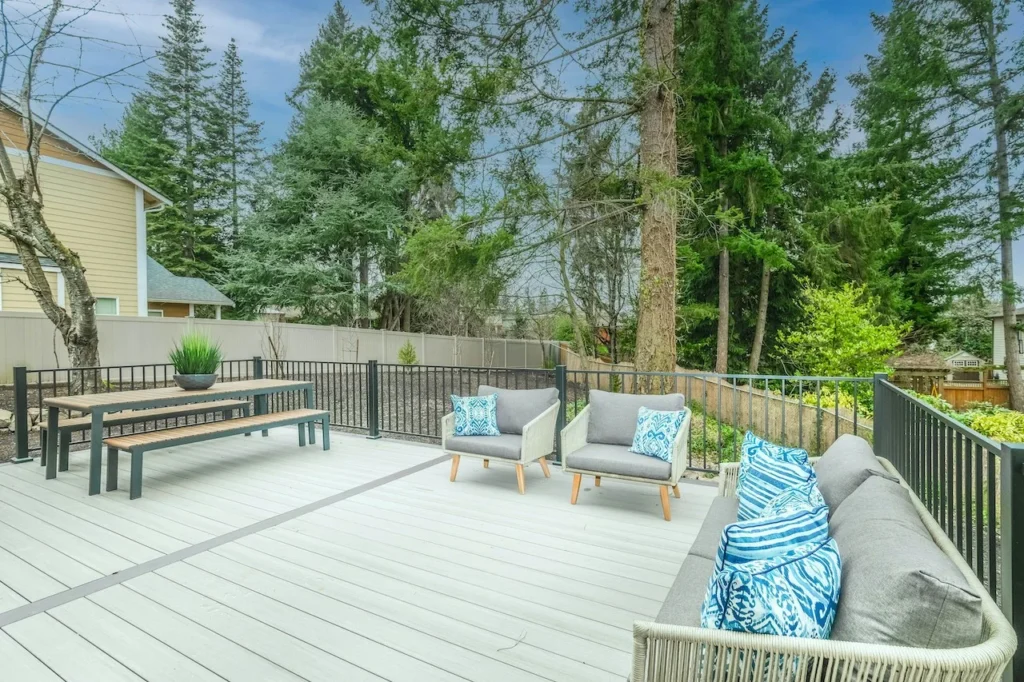
A covered deck can feel significantly different from a deck exposed to direct sunlight because the covering blocks some solar radiation from reaching the surface.
Shade does not necessarily make the outdoor air temperature dramatically cooler, but it can reduce the amount of direct solar energy reaching the decking and people using the space.
This can make shade particularly useful for:
- Outdoor dining
- Lounge seating
- Children’s play areas
- Outdoor kitchens
- Entertaining guests
- Poolside seating
If your backyard gets strong afternoon sun, consider incorporating a deck cover into your initial design rather than treating shade as an afterthought.
Choosing Composite Decking for Northern Virginia Summers
Northern Virginia homeowners need to consider seasonal weather when planning outdoor living spaces.
A deck may experience strong summer sunlight, humid conditions, rain, and changing temperatures throughout the year. That makes material durability and maintenance important considerations alongside appearance.
Sunburst Construction has served Northern Virginia homeowners for more than 25 years and offers custom decks, composite decking, Trex decking, patios, porches, pergolas, and other outdoor living features. The company’s service area includes communities throughout Fairfax County, Loudoun County, and Prince William County.
If you’re unsure what combination of materials, colors, and shade features makes sense for your backyard, working through those decisions with an experienced deck contractor can help.
For additional planning advice, see What to Know Before Building a Deck, which covers materials, layout, permits, budgeting, and the deck-building process.
How Much Does Composite Decking Cost?
The cost of composite decking depends on considerably more than the price of the boards.
Factors can include:
- Deck size
- Deck height
- Selected decking product
- Color and finish
- Railing system
- Stairs
- Structural requirements
- Site conditions
- Deck covers or shade structures
- Lighting
- Custom features
- Permitting requirements
Sunburst’s deck pricing calculator provides starting price ranges for different deck sizes and configurations.
A custom estimate is still important because every property and project is different.
What Should You Look for When Choosing Decking for a Sunny Yard?
When shopping for decking for sunny yards, don’t make your decision based on appearance alone.
Use this checklist:
- Sun exposure: How many hours of direct sunlight will the deck receive?
- Color: Would a lighter shade make sense for the space?
- Material: Which decking materials fit your maintenance expectations?
- Heat management: Does the manufacturer offer technology designed to reduce heat buildup?
- Shade: Could a pergola, deck cover, or landscaping provide relief?
- Lifestyle: Will people spend extended periods sitting, standing, or walking barefoot on the deck?
- Maintenance: How much upkeep are you willing to perform?
- Design: Does the decking complement your home’s exterior?
- Budget: Does the entire project fit your planned investment?
The goal isn’t simply to find the “coolest” deck. It is to create an outdoor space that balances comfort, appearance, durability, maintenance, and budget.
Is Composite Decking Still a Good Choice for Sunny Yards?
For many homeowners, composite decking can still be a practical choice for a sunny yard.
The important thing is to select the product and design with the environment in mind. Composite decking in direct sun will heat up, but color selection, heat-mitigating product technology, and shade can all influence the experience.
Composite decking can also offer benefits beyond heat management, including lower routine maintenance and resistance to common problems associated with traditional wood decking.
Sunburst’s existing guide to Trex composite decking provides additional information about composite materials, maintenance, durability, and the benefits of Trex.
Does Composite Decking Get Hot? The Bottom Line
Does composite decking get hot? Yes, especially when it is exposed to strong, direct sunlight on a hot day. However, the surface temperature of a deck depends on much more than the fact that it is composite. Color, product construction, sun exposure, climate, and shade can all influence how hot the surface becomes.
For a sunny backyard, consider lighter composite decking colors, heat-mitigating product options, and shade features such as deck covers or pergolas. You can also work with a deck designer to determine how the orientation and layout of your deck affect sun exposure throughout the day.
If you’re planning a composite deck in Northern Virginia, Sunburst Construction can help you evaluate your material, color, layout, and shade options. Call 703-406-0914 or contact Sunburst Construction to discuss your project and request a free estimate.
Frequently Asked Questions About Composite Decking Heat
Does composite decking get hot in direct sunlight?
Yes. Composite decking gets hot in direct sunlight, particularly during hot weather. The amount of heat depends on factors such as the decking color, product technology, climate, and duration of sun exposure.
What composite decking colors stay cooler?
Lighter-colored decking generally absorbs less solar energy than darker-colored decking. Light gray, beige, taupe, sand, and other lighter neutral shades can be worth considering for full-sun applications. Certain manufacturers also offer heat-mitigating technologies designed to reduce surface temperatures.
Is composite decking hotter than wood?
There is no universal answer because surface temperature depends on the specific materials, colors, environmental conditions, and sun exposure. Instead of comparing materials generally, compare the particular decking products you are considering.
How can I keep composite decking cooler?
Consider lighter-colored boards, heat-mitigating decking products, deck covers, pergolas, umbrellas, and landscaping that provides shade. Reducing direct solar exposure is an important part of improving comfort.
Is composite decking good for a sunny yard?
Composite decking can be a suitable option for sunny yards when the product and design are selected appropriately. Consider the deck’s sun exposure, color, material, shade opportunities, maintenance requirements, and how you plan to use the space.