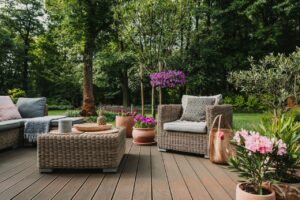
If you’re researching TimberTech decking cost, it’s important to look beyond the price of the deck boards alone. TimberTech decking prices can vary based on the product collection, deck size, framing requirements, railings, stairs, labor, site conditions, permits, and custom features included in the project.
This comprehensive guide explains the major factors that affect TimberTech decking costs, compares current TimberTech Composite and Advanced PVC options, and covers maintenance, warranties, installation considerations, and other expenses that can influence the final price of a new deck. Whether you’re replacing an aging wood deck or planning a completely new outdoor living space, this guide can help you better understand what goes into a TimberTech deck estimate and how to budget for your project.
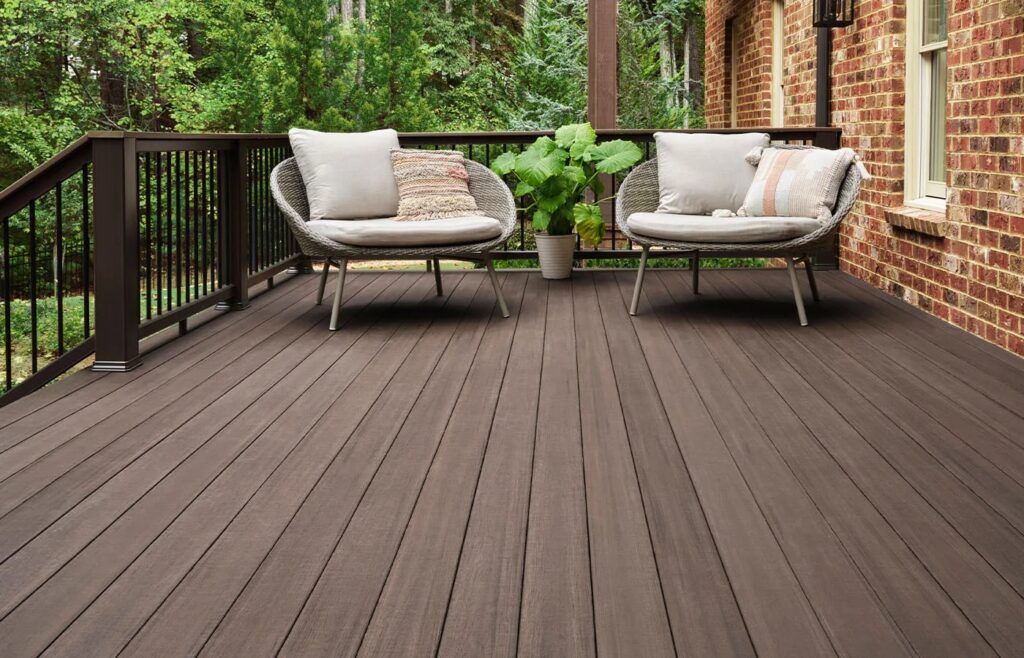
For homeowners in Northern Virginia, Sunburst Construction has decades of experience designing and building custom decks and outdoor living spaces throughout Fairfax, Loudoun, Prince William, and surrounding communities.
Ready to get accurate TimberTech decking prices for your home? Call Sunburst Construction at 703-406-0914 or contact us online today to schedule a consultation and request a free, project-specific estimate for your TimberTech deck.
What is TimberTech Decking?
TimberTech manufactures engineered decking designed to provide wood-inspired colors and textures without many of the maintenance requirements associated with traditional lumber.
Its current products fall into two primary categories:
- TimberTech Advanced PVC is made from high-performance polymers without wood fibers. Current collections include Vintage, Landmark, Harvest+, and Harvest.
- TimberTech Composite combines recycled plastic with wood particles. Current collections include Legacy, Reserve, Terrain+, Terrain, Premier+, Prime+, Prime, and Premier.
These collections span several price tiers, allowing homeowners to compare options based on budget, appearance, moisture resistance, warranty coverage, and other performance characteristics. TimberTech itself currently groups Advanced PVC from roughly $$ to $$$$ and Composite from $ to $$$, rather than publishing one universal per-square-foot retail price.
TimberTech Decking Costs
There is no single national TimberTech decking price because material costs vary by collection, dealer, region, and board profile. The cost of a completed deck also includes much more than the decking boards.
As a broader composite-deck benchmark, HomeAdvisor reports that professionally installed composite decks cost approximately $5,400 to $11,500 nationally in 2026, with an average around $8,500. Size and material selection are two of the primary factors behind that range.
HomeAdvisor separately reports that decking boards across material types can range from approximately $3 to $30 per square foot for the planks alone. That figure should not be confused with the installed cost of a completed TimberTech deck.
A complete TimberTech project may include decking and fasteners, framing and footings, railings, stairs, fascia, demolition, site preparation, permits, lighting, electrical work, and custom design features.
For Northern Virginia homes, factors such as sloped lots, limited access, elevated designs, and extensive railings can also increase the total cost.
When comparing TimberTech decking prices, focus on the complete project scope rather than the cost of the boards alone. Sunburst Construction can provide a project-specific estimate with our online pricing calculator based on your property, design, and preferred TimberTech products.
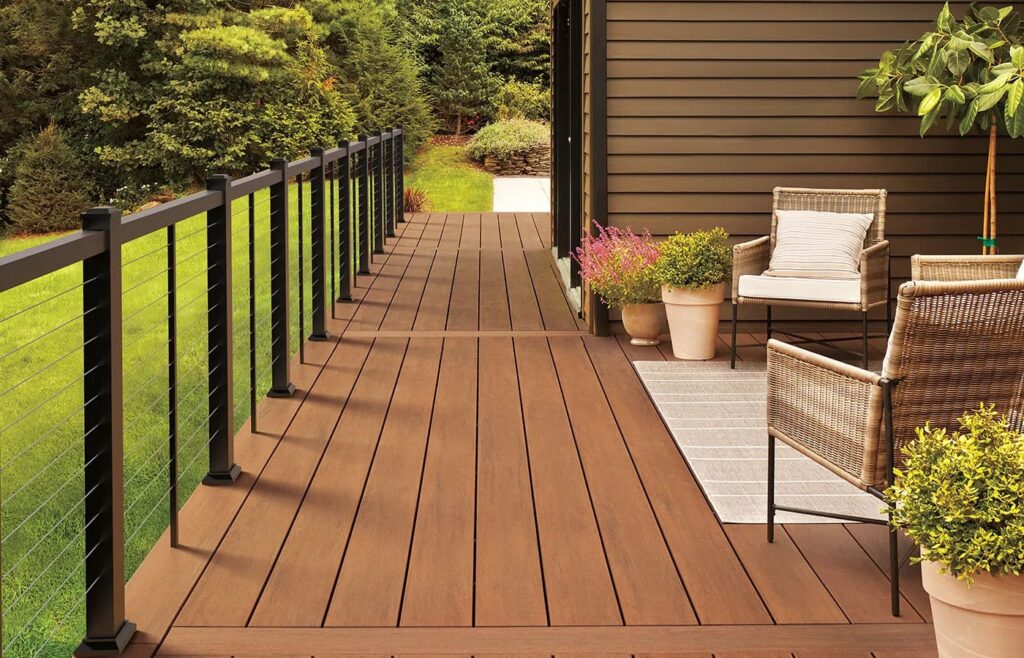
What Factors Affect TimberTech Decking Prices?
1. TimberTech Collection
Material selection is one of the biggest variables.
TimberTech currently organizes its products into price tiers. Advanced PVC collections such as Vintage and Landmark sit at the premium end of the manufacturer’s lineup, while Composite collections such as Prime and Prime+ are positioned in lower price tiers.
The most expensive collection is not automatically the best choice for every homeowner. Budget, appearance, moisture exposure, maintenance priorities, and the overall outdoor living design should all factor into the decision.
2. Deck Size
Larger decks require more decking, framing, hardware, footings, and labor, increasing the overall project cost.
However, doubling the square footage does not necessarily double every expense. Design, permit, mobilization, and other fixed costs may apply regardless of deck size.
3. Framing and Structural Requirements
Deck boards are only the finished walking surface. A new deck may also require posts, beams, joists, footings, connectors, flashing, and other structural materials.
If you are replacing an existing deck, a contractor should evaluate the current framing before assuming it can support new TimberTech boards.
4. Railings and Stairs
Railings and stairs can make up a substantial portion of the total project budget, particularly on elevated or second-story decks.
More stairs generally mean additional framing, footings, decking, railing, and labor.
5. Design Complexity
A simple rectangular deck will generally be less expensive to construct than a custom design incorporating multiple levels, angled sections, picture-frame borders, contrasting colors, built-in seating, lighting, pergolas, or outdoor kitchens.
TimberTech also offers select Advanced PVC products in narrow, standard, and wide board widths, allowing homeowners to create more customized decking patterns.
6. Site Conditions
Slopes, mature trees, drainage, difficult access, existing structures, and other property conditions can influence construction.
This is particularly relevant in established areas of Northern Virginia, where lots can range from relatively level suburban properties to heavily wooded or sloped sites. The same principle applies nationally: the easier a site is to access and build on, the fewer complications a contractor may encounter.
7. Demolition and Redecking
Replacing an existing deck can involve additional expenses for demolition and disposal.
If the existing framing is structurally sound and compatible with the new design, redecking may be possible. However, deterioration, inappropriate joist spacing, structural deficiencies, or significant design changes may require partial or complete reconstruction.
8. Permits and Inspections
Permit requirements and fees vary significantly by jurisdiction.
For example, Loudoun County requires building and zoning permits for all decks and requires footing, framing, and final inspections. Electrical permits may also be required for features such as stairway illumination, hot tubs, or spas.
Homeowners outside Virginia should check with their local building department before construction begins.

Why Choose TimberTech Over Traditional Wood Decking?
One of the most significant factors that influence homeowners to choose TimberTech is its low maintenance requirements compared to traditional wood decking. Here’s why TimberTech is often seen as the superior option:
1. Durability and Longevity
Traditional wood decking, while beautiful, is susceptible to damage from moisture, insects, and rot. It requires regular staining, sealing, and maintenance to keep it looking its best. TimberTech decking, on the other hand, is designed to resist these common issues, lasting much longer without the need for constant upkeep.
TimberTech decks can last up to 20 to 50 years, depending on the product line and how well they are cared for. In contrast, wood decks typically need to be replaced after 10 to 15 years, especially if they’re not properly maintained.
2. Low Maintenance
One of the biggest draws of TimberTech decking is its low maintenance requirements. Unlike wood, which needs to be stained or sealed every few years, TimberTech composite decking requires little more than regular cleaning with soap and water. This not only saves time but also reduces long-term costs associated with maintaining the deck.
3. Environmental Impact
TimberTech decking is made from a high percentage of recycled materials, making it a more environmentally friendly option compared to traditional wood decking. By using recycled wood fibers and plastics, TimberTech helps reduce the demand for virgin materials and minimizes waste in landfills.
Additionally, TimberTech’s manufacturing process is designed to be energy-efficient and environmentally responsible, further reducing the brand’s overall environmental footprint.
4. Aesthetic Appeal
While traditional wood decking has a classic look, TimberTech offers a wide range of colors and finishes that can mimic the appearance of natural wood without the downsides. From rich browns and grays to more exotic wood tones, TimberTech decking allows homeowners to achieve the look they desire without compromising on performance.
TimberTech Warranties
Another advantage of TimberTech decking is the extensive warranties offered by the company. Depending on the product line, TimberTech decks come with warranties ranging from 25 years to a lifetime. These warranties cover issues such as fading, staining, and material defects, giving homeowners peace of mind that their investment is protected.
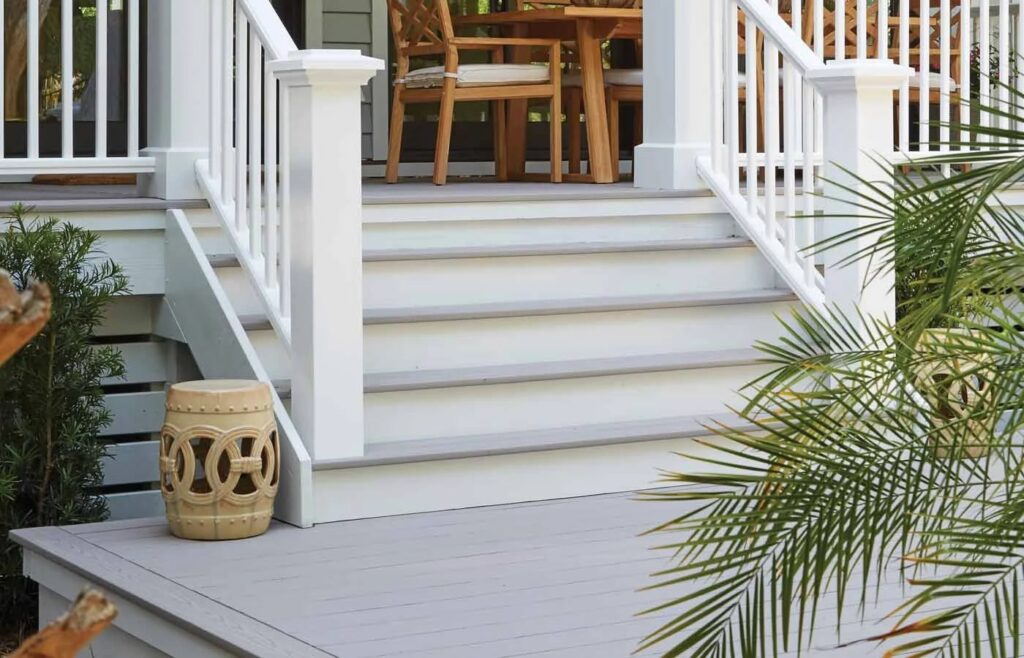
Is TimberTech Worth the Cost?
For many homeowners, TimberTech can be worth the additional upfront expense when appearance, reduced routine maintenance, moisture resistance, and long-term warranty coverage are priorities.
However, there is no single decking material that is best for every project.
Consider these questions before making your decision:
- How much do you want to spend initially?
- How much routine maintenance are you willing to perform?
- How much sunlight and moisture will the deck receive?
- What appearance best complements your home?
- Do you want a simple deck or a larger outdoor entertaining space?
- How much of the project budget needs to be reserved for railings, stairs, lighting, or other features?
- Are you building a new structure or resurfacing an existing deck?
A homeowner building a basic backyard deck may choose differently than someone creating a multi-level outdoor living space designed for frequent entertaining.
Why Homeowners Choose Sunburst Construction
Choosing the right contractor is just as important as choosing the right decking material. Sunburst Construction has served Northern Virginia homeowners since 1994, bringing decades of hands-on experience to custom decks and complete outdoor living projects.
Homeowners choose Sunburst Construction for:
- More than 30 years of experience designing and building outdoor living spaces throughout Northern Virginia
- Custom deck design tailored to the home, property, budget, and how the space will be used
- Experience with TimberTech and other composite decking options, helping homeowners compare materials, finishes, and long-term maintenance needs
- Local knowledge of Fairfax, Loudoun, Prince William, and surrounding communities, including common permitting, HOA, and site-planning considerations
- Detailed project planning that accounts for framing, stairs, railings, drainage, access, grade, and other property-specific factors
- Complete outdoor living capabilities, including decks, patios, porches, pools, gazebos, outdoor kitchens, and other backyard features
- A convenient pricing calculator that gives homeowners a practical starting point for estimating project costs before scheduling a consultation
- Project-specific estimates based on the actual design, materials, site conditions, and scope of work—not simply a generic per-square-foot price
For homeowners researching TimberTech decking prices, our pricing calculator can help establish an initial budget, while a consultation with Sunburst provides a more accurate estimate based on the specifics of the property and project.
Plan Your TimberTech Deck With Confidence
Understanding TimberTech decking cost means looking beyond the price of the boards. The collection you choose, deck size, framing, stairs, railings, labor, site conditions, permits, and custom features all contribute to the final investment.
With multiple Composite and Advanced PVC options available, TimberTech gives homeowners flexibility to balance budget, appearance, durability, and maintenance preferences. The best choice depends on your home, how you plan to use the space, and the overall scope of your project.
For homeowners in Northern Virginia, Sunburst Construction brings decades of experience designing and building custom decks and complete outdoor living spaces. Our team can help you compare TimberTech options, evaluate your property, and develop a project plan tailored to your goals.
Ready to get accurate TimberTech decking prices for your home? Call Sunburst Construction at 703-406-0914 today or contact us online to schedule a consultation and request a free estimate.