Your backyard should be a place where you can relax, entertain guests, and enjoy fresh air without constantly worrying about the weather. However, when comparing a covered deck vs. pergola vs. screened porch, deciding which outdoor structure best fits your home can feel overwhelming. Each option offers unique advantages, from reliable shade and rain protection to open-air designs and insect-free relaxation.
For homeowners in Northern Virginia, the right choice depends on your budget, lifestyle, backyard layout, and how you plan to use your outdoor living space. At Sunburst Construction, we help homeowners design beautiful, functional outdoor areas that complement their homes. Ready to transform your backyard? Contact Sunburst Construction to discuss your project and request a free estimate.
Covered Deck vs. Pergola vs. Screened Porch: Understanding Your Options
Before deciding which structure is best for your home, it helps to understand how each one works.
Although all three structures can improve your backyard’s functionality and appearance, they offer different levels of comfort, protection, and privacy.
Here’s a quick overview:
- Covered deck: Features a solid roof that protects against direct sunlight and rainfall while maintaining an open-air environment.
- Pergola: Uses an open-beam or partially covered roof to create filtered shade and an attractive outdoor gathering area.
- Screened porch: Combines a roof with screened walls to provide shade, rain protection, and a barrier against mosquitoes and other insects.
Each option can be customized with seating, lighting, ceiling fans, and decorative features, depending on its structural design.
The best choice comes down to how much protection you want and how connected you prefer to feel to the outdoors.
What Is a Covered Deck?
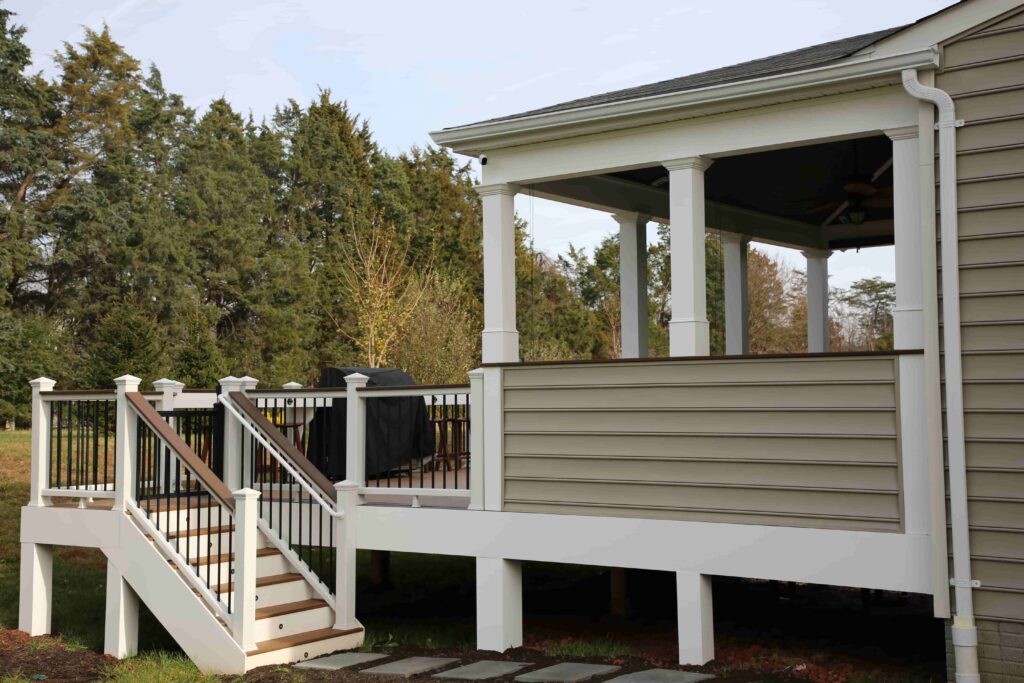
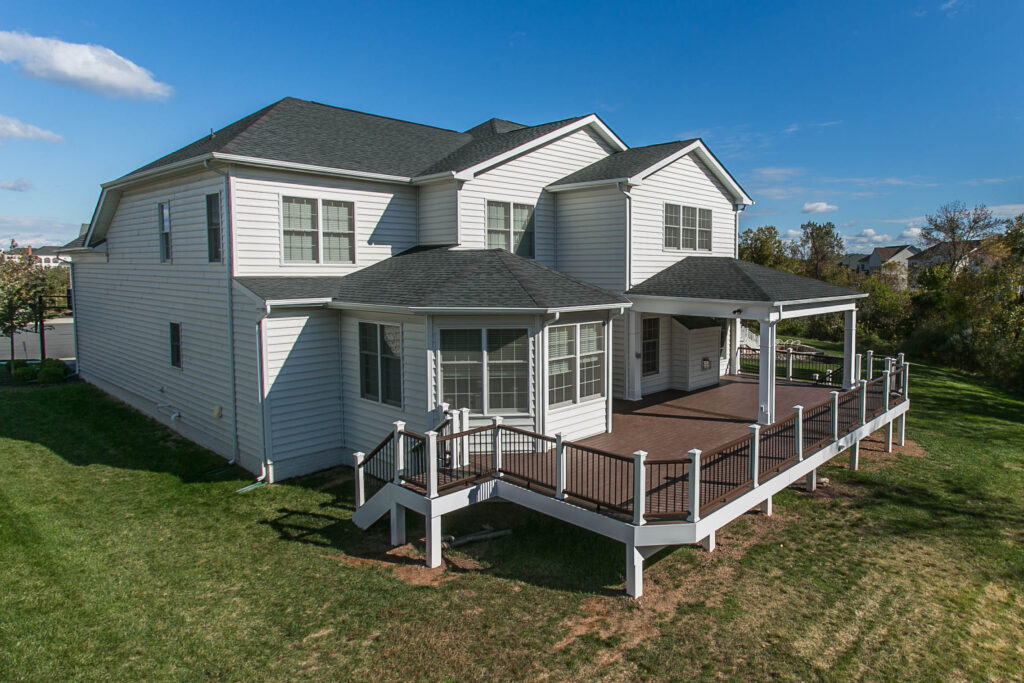
A covered deck is an elevated or ground-level deck with a permanent overhead roof. Unlike an uncovered deck, it provides consistent shade and protection from rain.
Covered decks are particularly useful for homeowners who want to spend time outside without being exposed to direct sunlight.
They can also create a comfortable transition between indoor and outdoor living areas.
Benefits of a Covered Deck
One major advantage of a covered deck is its versatility.
Because the roof shields the space from overhead weather exposure, homeowners have more flexibility when arranging outdoor furniture and entertainment features.
Additional benefits include:
- Reliable shade: A permanent roof creates a consistently shaded seating area.
- Rain protection: Enjoy your outdoor space during light rain without needing to move indoors.
- Flexible design: Incorporate dining areas, lounge furniture, lighting, or ceiling fans.
- Open-air atmosphere: Enjoy unobstructed views and natural airflow.
- Architectural appeal: A well-designed roof can complement your home’s existing exterior.
A covered deck is an excellent option for homeowners who enjoy hosting outdoor gatherings but don’t necessarily want a fully enclosed space.
Potential Drawbacks of a Covered Deck
Although a covered deck offers excellent overhead protection, it doesn’t protect against everything.
Mosquitoes, wind-driven rain, and pollen can still enter through its open sides.
Additionally, adding a permanent roof typically requires more structural planning than installing a simple shade feature.
Homeowners should also consider how the roof might affect natural light entering nearby windows.
What Is a Pergola?
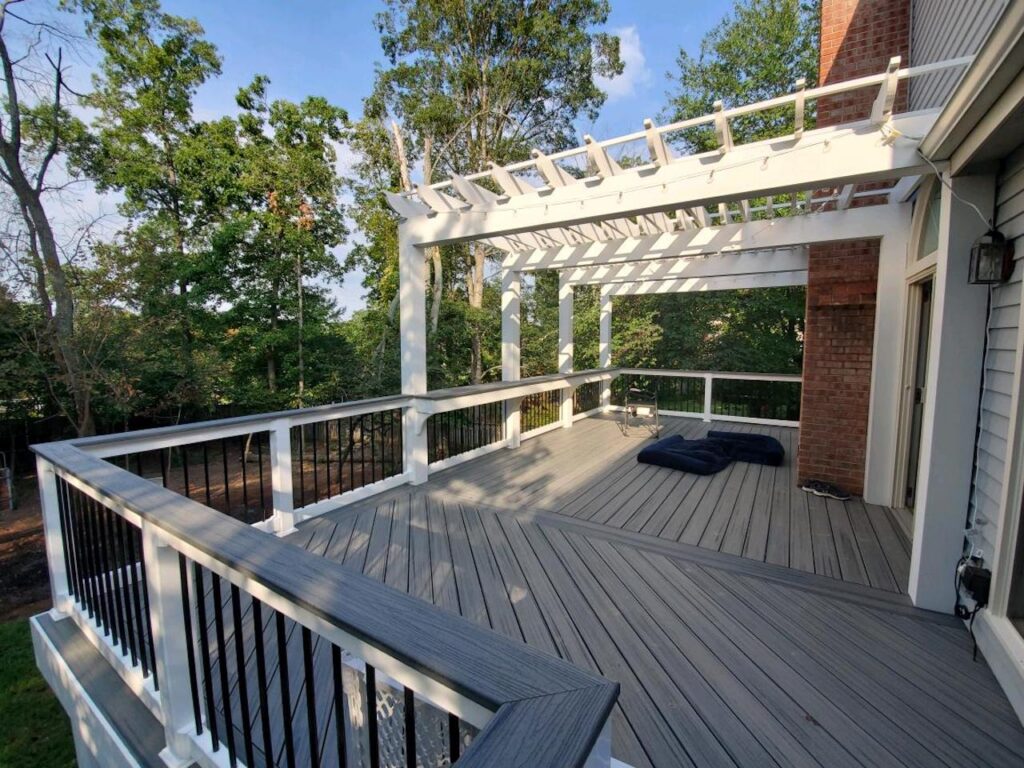
A pergola is an outdoor structure featuring vertical supports and an overhead framework of beams or rafters.
Traditional pergolas have open roofs that allow sunlight and air to pass through while creating partial shade.
Unlike covered decks, pergolas generally emphasize architectural design and maintaining an open connection to the backyard.
They can be installed over a deck, patio, walkway, or designated seating area.
Benefits of Installing a Pergola
Pergolas are popular because they can enhance an outdoor living space without making it feel enclosed.
Their architectural framework defines a gathering area while preserving views of the sky.
Benefits include:
- Filtered sunlight: Enjoy partial shade without blocking all natural light.
- Flexible placement: Install a pergola over a patio, deck, or garden seating area.
- Visual interest: Add an attractive architectural element to your backyard.
- Customization: Incorporate climbing plants, decorative lighting, or approved shade systems.
- Open-air comfort: Maintain excellent airflow throughout the space.
A pergola can work particularly well for homeowners who enjoy gardening or want to establish a dedicated outdoor dining area.
For additional design inspiration, explore Sunburst Construction’s guide explaining the differences between a pergola and a gazebo.
Potential Drawbacks of a Pergola
The biggest limitation of a traditional pergola is its lack of complete weather protection.
Because the roof contains open spaces, rain can pass through, and sunlight may reach the seating area throughout the day.
Adding a fabric canopy, solid panels, or adjustable louvers can provide more coverage, but performance varies by system.
A pergola may also require ongoing maintenance depending on the materials used.
If your primary goal is enjoying the backyard during rainy weather, a permanent covered deck may be more practical.
What Is a Screened Porch?
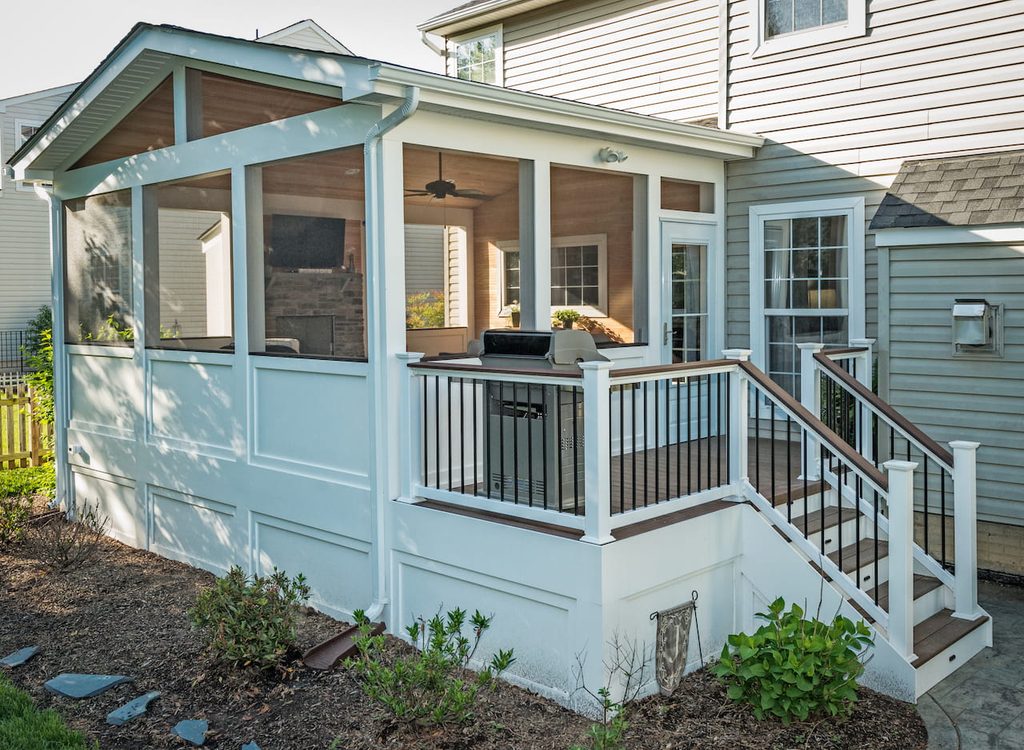
A screened porch is a roofed outdoor living area enclosed with mesh screening.
It provides the fresh air and backyard views associated with an outdoor space while creating a barrier against mosquitoes, flies, and other insects.
A screened-in porch can be especially beneficial in Northern Virginia, where humid summers and seasonal insects can make outdoor gatherings uncomfortable.
Benefits of a Screened-In Porch
The greatest advantage of a screened-in porch is the balance between outdoor enjoyment and added protection.
While a covered deck provides overhead shelter, a screened porch creates a more defined living environment.
Benefits include:
- Insect protection: Screens help prevent mosquitoes and other bugs from entering.
- Weather coverage: A solid roof protects against direct sunlight and overhead rain.
- Outdoor comfort: Enjoy fresh air without being completely exposed to your surroundings.
- Additional privacy: Screens and optional privacy features create a more defined space.
- Flexible functionality: Design a comfortable area for dining, reading, entertaining, or relaxing.
The Environmental Protection Agency recommends maintaining properly fitted screens as an effective way to help keep mosquitoes out.
For families who frequently entertain or enjoy relaxing outside in the evening, a screened porch can make backyard living significantly more comfortable.
Explore Sunburst Construction’s guide on what to know before installing a screened-in porch.
Potential Drawbacks of a Screened Porch
A screened porch generally requires more construction components than an open pergola, including a roof, screen framing, doors, and supporting structural elements.
Screens also require occasional cleaning and may eventually need repair or replacement.
Although screening allows air circulation, the space may feel less open than a covered deck or pergola.
A screened porch is also not a fully insulated room, meaning outdoor temperatures and humidity still affect comfort.
Covered Deck vs. Pergola vs. Screened Porch: Key Differences
Understanding the main differences between these deck covering options can help you narrow down your priorities.
| Feature | Covered Deck | Pergola | Screened Porch |
| Shade | Full overhead shade | Partial or adjustable | Full overhead shade |
| Rain protection | Strong overhead protection | Limited unless specially covered | Strong overhead protection |
| Insect protection | No | No | Yes, with properly fitted screens |
| Airflow | Excellent | Excellent | Good |
| Privacy | Limited without added features | Limited without added features | Moderate; customizable |
| Construction complexity | Moderate to high | Varies by design | Generally high |
| Open-air feeling | High | Very high | Moderate |
| Best for | Outdoor entertaining | Decorative shade | Bug-reduced outdoor relaxation |
While these differences provide a useful starting point, every backyard has unique characteristics.
The amount of sunlight your yard receives, your preferred level of enclosure, and the condition of any existing deck can all influence the ideal structure.
Which Deck Covering Option Is Best for Northern Virginia Weather?
Northern Virginia experiences hot, humid summers, seasonal thunderstorms, cooler fall temperatures, and occasional winter snow.
These conditions make weather protection an important consideration when designing an outdoor living space.
Best Option for Sun Protection
If your backyard receives intense afternoon sunlight, a covered deck or screened porch provides more consistent overhead shade than a traditional pergola.
However, a pergola with an appropriate adjustable shade system may offer a useful compromise between sunlight and coverage.
Consider the direction your backyard faces and whether nearby trees or buildings already provide shade.
Best Option for Rain Protection
A covered deck and a screened porch generally provide better overhead rain protection because they have solid roofs.
Traditional pergolas are less effective unless fitted with a suitable roof or louver system.
Remember that wind-driven rain can still enter covered decks through their open sides and screened porches through their screening.
Best Option for Mosquito Protection
A screened-in porch is typically the strongest choice for reducing insect exposure.
For homeowners who enjoy outdoor dinners or evening gatherings, screening can make a noticeable difference in comfort.
The EPA’s mosquito prevention guidance also recommends eliminating standing water around homes to reduce mosquito breeding areas.
How Much Does a Covered Deck, Pergola, or Screened Porch Cost?
Budget often plays a major role when comparing a covered deck vs. pergola vs. screened porch.
However, construction costs vary considerably depending on project size, materials, site conditions, and desired features.
Covered Deck Costs
A covered deck may require additional footings, structural supports, roof framing, roofing materials, and electrical work.
The final cost depends on whether you’re building a new deck or adding a roof to an existing structure.
Additional features such as finished ceilings, fans, and lighting can increase the investment.
Pergola Costs
A basic open-roof pergola may be more affordable than a fully roofed outdoor structure.
However, large custom pergolas or systems with motorized louvers, premium materials, and integrated lighting may cost substantially more.
The complexity of the design matters just as much as the overall size.
Screened Porch Costs
Screened porches include roofing, structural framing, screening, and doors, which contribute to overall construction costs.
Sunburst Construction’s published project pricing guide lists screened or open-air porch examples ranging from approximately $35,000 to $90,000, depending on project size and features.
These figures are planning references rather than guaranteed quotes. Actual pricing depends on your property and the final scope of work.
When comparing estimates, consider long-term maintenance, durability, and the features included rather than focusing solely on initial cost.
Can You Add a Roof or Screened Porch to an Existing Deck?
One of the most common questions homeowners ask is whether they can upgrade an existing deck instead of building an entirely new structure.
In many cases, modifications are possible, but the existing deck must be evaluated first.
Adding a roof or screened enclosure can introduce additional structural loads that the original deck wasn’t designed to support.
Before proceeding, a qualified professional should assess:
- The condition of the current deck framing
- Existing footings and support posts
- Roof weight and applicable wind or snow loads
- Connections between the structure and the home
- Drainage, flashing, and waterproofing
- Local permit and inspection requirements
Homeowners should never assume that an existing deck can safely support a new roof without an appropriate evaluation.
If you’re planning a backyard upgrade, reviewing these common deck design mistakes can also help you avoid expensive planning problems.
How to Choose the Right Outdoor Living Space for Your Home
The best outdoor structure isn’t necessarily the largest or most elaborate option. It’s the one that matches how you actually want to use your backyard.
Before making your decision, ask yourself these questions.
1. How Will You Use the Space?
If you frequently host outdoor dinners or family gatherings, a covered deck may provide the flexibility you need.
If your goal is to create an attractive seating area with filtered sunlight, a pergola could be ideal.
For homeowners who want to read, relax, or entertain without constant interruptions from insects, a screened porch may offer greater comfort.
2. How Much Weather Protection Do You Need?
Think about the conditions that currently prevent you from enjoying your backyard.
Is the biggest problem direct sunlight, frequent rain, or mosquitoes?
Prioritizing your most common outdoor frustrations can quickly narrow your options.
3. What Design Complements Your Home?
The structure should look like a natural extension of your home’s architecture.
A covered deck with a coordinated roofline can create a seamless appearance, while a pergola may add an attractive focal point.
Screened porches can also incorporate complementary roofing, trim, railings, and decking materials.
Explore Sunburst Construction’s guide to designing an outdoor entertainment space in Northern Virginia for additional inspiration.
4. What Is Your Long-Term Budget?
Consider not only installation costs but also cleaning, maintenance, and future upgrades.
For example, choosing a pergola today with plans to add a solid roof later may require more structural planning than expected.
Discussing your long-term goals with a contractor can help you avoid unnecessary modifications.
Make the Right Choice With Sunburst Construction
When deciding between a covered deck vs. pergola vs. screened porch, the best choice comes down to your lifestyle, budget, and the level of outdoor protection you want. Covered decks provide dependable shelter, pergolas create stylish and airy gathering spaces, and screened porches offer a comfortable environment with added protection from insects.
At Sunburst Construction, we’ve been helping Northern Virginia homeowners create custom outdoor living spaces for decades. Whether you’re considering a new deck, pergola, or screened-in porch, our team can help you explore designs that complement your home and make your backyard more enjoyable.
Ready to bring your outdoor living vision to life? Contact Sunburst Construction today to request a free estimate, or call 703-406-0914 to start planning your project.
FAQ: Covered Decks, Pergolas, and Screened Porches
Is a Pergola Better Than a Covered Deck?
A pergola is ideal if you want partial shade, architectural interest, and an open-air atmosphere. A covered deck is generally better for homeowners seeking dependable overhead shade and rain protection.
Does a Screened Porch Add More Usable Space?
A screened porch creates a defined outdoor gathering area that can be used for dining, relaxation, and entertaining. However, it remains an outdoor space rather than a fully conditioned home addition.
Can You Put Screens Around a Pergola?
Some pergola designs can accommodate screen systems. However, the structure must be designed to support them, and traditional open-roof pergolas may still allow rain and insects to enter from above.
Do Covered Decks and Screened Porches Require Permits?
Many roofed or attached outdoor structures require building permits. Requirements vary by jurisdiction and project details, so homeowners should verify local rules before construction.
Which Option Is Best for Entertaining Guests?
Covered decks provide flexible open-air entertaining areas, while screened porches offer added insect protection. Pergolas are excellent for casual gatherings where filtered sunlight and decorative design are priorities.