Choosing between an outdoor fireplace vs. fire pit is one of the most important decisions when designing a comfortable and inviting backyard. Both features provide warmth, ambiance, and a welcoming place to gather, but they differ significantly in cost, space requirements, installation, and safety. Understanding these differences can help you select a feature that complements your home, fits your budget, and enhances your outdoor lifestyle.
At Sunburst Construction, we help Northern Virginia homeowners transform their backyards with beautiful, functional outdoor fire features and custom outdoor living spaces. Whether you envision an elegant stone fireplace or a cozy fire pit surrounded by comfortable seating, our team can help you explore your options. Contact Sunburst Construction today to discuss your backyard project.

Outdoor Fireplace vs. Fire Pit: Understanding the Main Differences
Although outdoor fireplaces and fire pits serve similar purposes, their designs create different experiences.
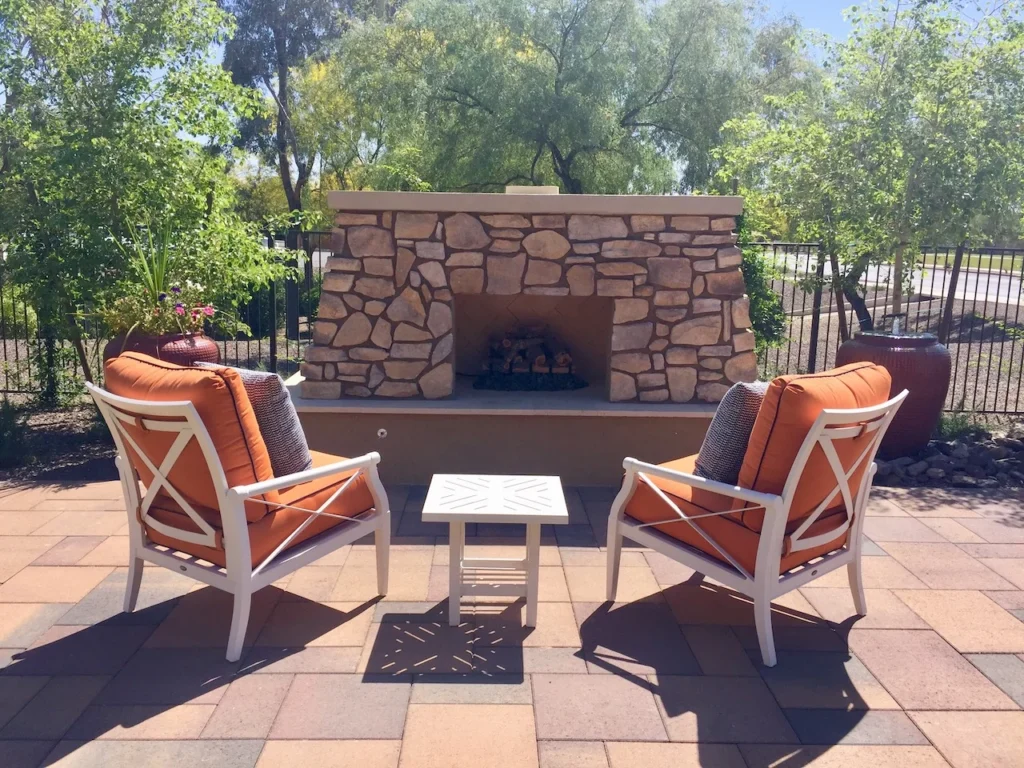
An outdoor fireplace is typically a permanent structure made from stone, brick, or other heat-resistant materials. It usually features an enclosed firebox and a chimney that directs smoke upward. Its architectural design makes it a striking focal point for patios and backyard seating areas.
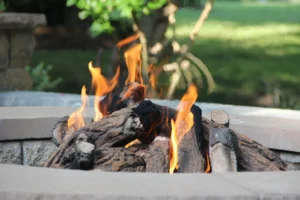
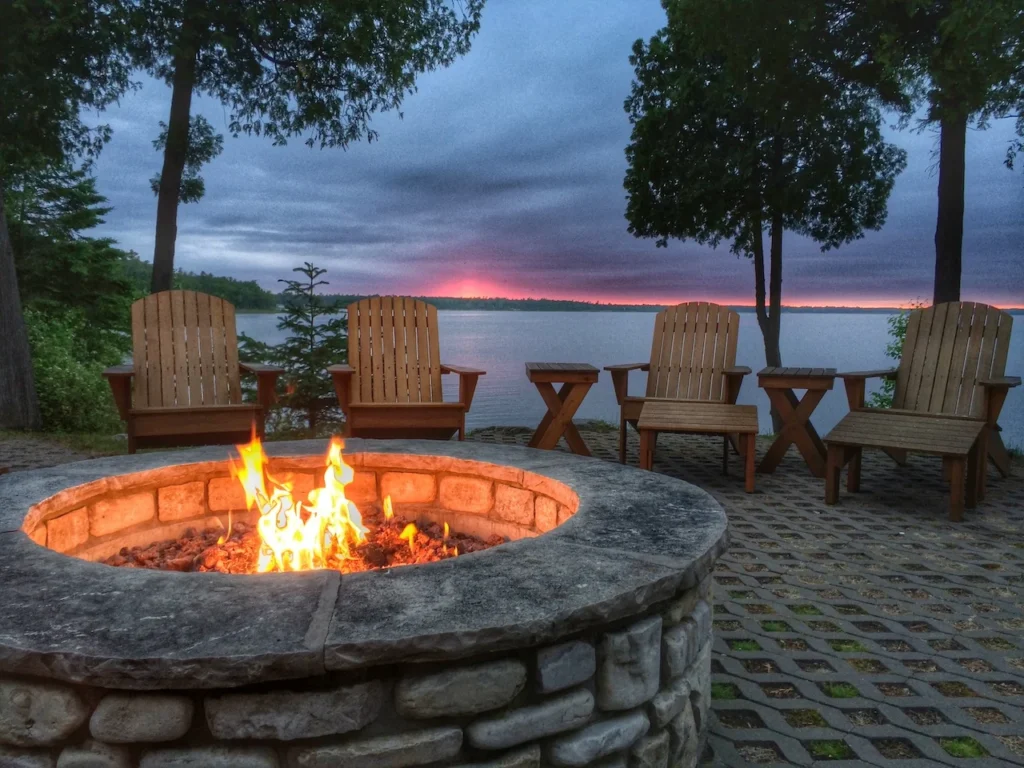
A fire pit is a lower, more open structure that allows people to gather around the flames. Fire pits can be portable or permanently installed and are available in wood-burning, propane, and natural gas designs.
Here are the primary differences to consider:
- Cost: Fire pits generally have lower upfront costs, while custom outdoor fireplaces typically require a larger investment.
- Space: Fireplaces need room for their structure and front-facing seating. Fire pits need adequate clearance and space around the entire feature.
- Safety: Both require proper placement, supervision, and compliance with local regulations.
- Heat distribution: Fireplaces direct warmth primarily forward, while fire pits radiate heat in multiple directions.
- Design: Fireplaces create a formal architectural centerpiece, while fire pits encourage casual, social gatherings.
- Installation: Permanent fireplaces usually require more extensive construction than basic fire pit installations.
The right choice depends on your available space, intended use, preferred appearance, and overall backyard design.
Outdoor Fireplace vs. Fire Pit Cost: Which Is More Affordable?
Budget is often one of the deciding factors when choosing between these two backyard fire features.
Both options are available at different price points, but the materials, fuel source, site conditions, and complexity of installation significantly influence the final investment.
Outdoor Fireplace Cost and Installation Expenses
An outdoor fireplace generally requires a larger budget because of its structural components, materials, and installation requirements.
According to Angi’s 2026 outdoor fireplace cost guide, most homeowners spend approximately $1,500 to $8,000 on an outdoor fireplace, although large custom projects can cost significantly more.
Factors influencing outdoor fireplace cost include:
- Stone, brick, or prefabricated construction
- Fireplace dimensions and architectural details
- Foundation and structural requirements
- Wood-burning versus gas-powered systems
- Gas line installation and utility connections
- Labor, site preparation, and permitting
- Additional patio construction or landscaping
A custom masonry fireplace with premium finishes and integrated seating will generally cost more than a simpler prefabricated model.
When planning an outdoor fireplace installation, homeowners should also consider the surrounding space. A new paver patio, built-in seating, or outdoor kitchen can increase the total project cost.
For homeowners planning a complete backyard renovation, Sunburst Construction’s outdoor project pricing calculator can help explore different features and preliminary budgets.
Fire Pit Installation Costs
Fire pits are generally more affordable, particularly when choosing a portable model or a simple built-in design.
According to Angi’s 2026 fire pit installation cost guide, professional fire pit installation commonly costs between $200 and $3,000, depending on the materials, dimensions, and design.
Portable fire pits may cost less, while custom stone installations with gas connections can require a much greater investment.
Several factors affect fire pit installation costs:
- Portable versus permanent construction
- Materials such as metal, concrete, brick, or stone
- Wood, propane, or natural gas fuel
- Excavation and ground preparation
- Gas line connections
- Surrounding hardscaping and seating
For homeowners interested in a cohesive outdoor design, incorporating a fire pit into a professionally designed patio can create an attractive and functional gathering area.
Cost takeaway: A fire pit is usually the more budget-friendly choice. However, homeowners seeking a permanent architectural focal point may find that a custom outdoor fireplace better supports their long-term design goals.
Note: These figures are general national estimates, not Sunburst Construction quotes. Project-specific pricing varies, and extensive custom outdoor construction may involve a substantially higher total budget.
Outdoor Fireplace vs. Fire Pit Space Requirements
Available backyard space is another important consideration.
The right fire feature should provide comfortable seating, allow people to move freely, and maintain safe distances from surrounding structures.
How Much Space Does an Outdoor Fireplace Need?
Outdoor fireplaces are substantial structures that typically work best as part of a dedicated seating area.
Because they radiate much of their warmth toward the front, chairs and sofas are usually arranged facing the fireplace.
When designing the space, consider:
- The fireplace’s dimensions and foundation
- Comfortable seating and walking areas
- Required distances from combustible materials
- Nearby landscaping, fences, and buildings
- Chimney placement and ventilation
- Existing patios and property boundaries
An outdoor fireplace can be particularly attractive in a spacious backyard where it serves as the centerpiece of an outdoor living room.
Homeowners considering additional architectural features may also explore pergola designs. However, a fireplace should only be placed near or beneath an overhead structure when its installation is specifically permitted by applicable codes and manufacturer requirements.
How Much Space Does a Fire Pit Need?
Although fire pits tend to have smaller physical dimensions, they also require adequate room for seating and circulation.
Unlike a fireplace, a fire pit typically attracts people from multiple directions. This makes the total gathering area an important part of the design.
Before choosing a location, consider the following questions:
- How many people will regularly use the space?
- Will chairs surround the fire pit?
- Is there enough room for people to move safely?
- Are trees, fences, or other combustible materials nearby?
- Will the feature interfere with walkways or outdoor dining areas?
A compact fire pit can be a practical option for a smaller yard, provided the property offers the necessary safety clearances.
For additional design inspiration, read our guide to the best deck layouts for small backyards.
Space takeaway: Fire pits often offer more flexibility, while fireplaces are better suited to homeowners who want a permanent and clearly defined seating area. Neither should be selected based on footprint alone; safe clearances are essential.
Outdoor Fireplace vs. Fire Pit Safety Considerations
Safety should be a top priority when planning any backyard fire feature.
Although a fireplace partially contains flames within a firebox, both options produce significant heat and can create risks if installed or operated incorrectly.
Fire Pit Safety: Placement and Open Flames
Because fire pits often have exposed flames, their location deserves careful attention.
The U.S. Fire Administration’s outdoor fire safety guidance recommends positioning outdoor fireplaces, fire pits, and chimineas at least 10 feet away from the home and combustible materials.
This is general safety guidance rather than universal code approval. Local regulations and manufacturer instructions may require greater distances.
Important fire pit safety practices include:
- Position the feature on an approved, stable, noncombustible surface.
- Keep flames away from structures, low branches, and combustible furniture.
- Supervise children and pets whenever a fire is burning.
- Use a suitable metal spark screen for wood-burning fires.
- Keep appropriate fire-extinguishing equipment accessible.
- Never leave an active fire unattended.
- Fully extinguish the fire before leaving the area.
Proper fire pit safety also involves selecting a unit suitable for its intended location.
A portable fire pit should never be placed directly on wood or composite decking unless the manufacturer expressly permits that installation and all required protective measures and clearances are met.
Outdoor Fireplace Safety and Ventilation
Outdoor fireplaces offer a more enclosed fire area, but they are not automatically safer in every setting.
An outdoor fireplace installation requires consideration of structural stability, safe chimney design, ventilation, and heat exposure.
For wood-burning fireplaces, regular inspection and cleaning help prevent hazardous buildup and maintain proper operation.
For gas fireplaces, professional installation is particularly important because improper connections or ventilation can create serious hazards.
Homeowners should also remember that a fireplace chimney does not automatically make installation beneath a covered patio, porch, or pergola safe.
Every project must comply with applicable building and fire codes, manufacturer specifications, and necessary permits.
Wood-Burning vs. Gas Fire Features: Which Is Safer?
Both wood-burning and gas fire features have advantages and specific safety considerations.
Wood-burning options offer the familiar crackling sounds and traditional atmosphere of a natural fire. However, they also produce smoke, ash, and potentially dangerous embers.
Gas-powered systems typically offer convenient ignition, adjustable flames, and less particulate pollution than wood-burning alternatives.
The U.S. Environmental Protection Agency’s backyard recreational fire guidance recommends using dry, seasoned wood, avoiding the burning of waste materials, and considering cleaner-burning alternatives.
Gas systems still require correct installation, ventilation, maintenance, and safe operation.
No fuel type eliminates the need for supervision and proper fire safety practices.
Can You Install an Outdoor Fireplace or Fire Pit on a Deck?
This is an especially important question for homeowners considering a combination of backyard fire features and elevated outdoor living spaces.
Traditional wood-burning fire pits are generally better suited to approved noncombustible ground-level areas than combustible deck surfaces.
Even composite decking can be damaged by excessive heat. A material’s resistance to everyday weather exposure does not make it fireproof.
Gas fire tables and other specialized appliances may be approved for certain deck installations, but compatibility depends on the product, required clearances, surrounding materials, and local regulations.
Permanent masonry fireplaces present additional challenges because their substantial weight may require independent foundations and structural engineering.
Before incorporating any fire feature into a deck design, consult qualified professionals.
For a broader planning checklist, explore what to know before building a deck.
Outdoor Fireplace vs. Fire Pit: Which Is Better for Entertaining?
Cost and safety matter, but the way you envision using your outdoor living space should also guide your decision.
Choose an Outdoor Fireplace for a Defined Outdoor Living Space
An outdoor fireplace can make a patio feel like an extension of your home’s interior.
It creates a strong visual centerpiece and encourages a comfortable seating arrangement facing the flames.
An outdoor fireplace may be ideal if you:
- Prefer a formal or elegant backyard design
- Want an architectural focal point
- Enjoy smaller, intimate gatherings
- Have sufficient space for permanent construction
- Plan to coordinate the feature with a larger patio renovation
A thoughtfully designed fireplace can complement stone patios, outdoor dining spaces, and other architectural elements.
Choose a Fire Pit for Flexible Gatherings
A fire pit encourages a more casual, interactive atmosphere.
Guests can gather around the fire, making conversation easier and creating a welcoming setting for family activities.
A fire pit may be the better option if you:
- Regularly entertain groups of friends
- Prefer circular or flexible seating arrangements
- Want a more affordable installation
- Have a modest-sized backyard
- Enjoy a casual, campfire-inspired atmosphere
Both options can enhance the functionality and appearance of a backyard when planned carefully.
Explore Sunburst Construction’s outdoor features and design services to learn more about creating a cohesive entertaining area.
Additional Factors to Consider Before Installation
Beyond cost, space, and safety, several practical factors influence which fire feature will work best for your home.
Maintenance Requirements
Wood-burning fireplaces and fire pits require ash removal, safe disposal of embers, and routine cleaning.
Fireplaces with chimneys may also need periodic professional inspections and cleaning.
Gas fire features eliminate wood ash but still require maintenance of burners, ignition components, and gas connections.
Consider how frequently you plan to use the feature and how much maintenance you are comfortable performing.
Local Regulations and Permits
Northern Virginia homeowners should verify local requirements before beginning installation.
Rules can vary between Fairfax, Loudoun, and Prince William counties, and additional restrictions may apply within individual municipalities or homeowners associations.
Permanent structures, gas connections, and larger patio projects may require permits or inspections.
Homeowners should also check seasonal fire restrictions and applicable rules governing recreational outdoor burning.
Long-Term Backyard Plans
Think beyond the immediate project.
If you eventually want an outdoor kitchen, expanded patio, or new seating area, it may be beneficial to design those elements together.
Planning early can help avoid unnecessary reconstruction and create a more cohesive outdoor environment.
Transform Your Backyard With Sunburst Construction
When comparing an outdoor fireplace vs. fire pit, the best choice comes down to your budget, available space, safety requirements, and the experience you want to create. A fireplace provides an elegant architectural centerpiece, while a fire pit offers flexible seating and a relaxed gathering atmosphere. With thoughtful planning and professional installation, either can become a beautiful addition to your Northern Virginia backyard.
At Sunburst Construction, we help homeowners throughout Northern Virginia design inviting patios, decks, and customized outdoor environments. Whether you’re planning a new fire pit, exploring outdoor fireplace installation, or envisioning a complete backyard transformation, our team can help you turn your ideas into a practical design. Contact Sunburst Construction today or call 703-406-0914 to discuss your project and take the next step toward your ideal outdoor living space.
FAQ: Outdoor Fireplaces and Fire Pits
Is an Outdoor Fireplace More Expensive Than a Fire Pit?
Generally, yes. Outdoor fireplace cost is usually higher because fireplaces require more materials and structural construction. Portable fire pits tend to be the least expensive option, while custom-built stone fire pits and fireplaces can require significantly larger budgets.
Which Is Better for a Small Backyard: a Fire Pit or Fireplace?
A compact fire pit is often easier to incorporate into a small backyard. However, the entire seating area and safety clearances must be considered. A well-designed fireplace may also work in a smaller space if the property’s dimensions and regulations allow it.
Are Outdoor Fireplaces Safer Than Fire Pits?
Outdoor fireplaces typically contain flames on multiple sides, potentially reducing exposure to sparks. However, both require proper installation, fire-resistant materials, appropriate clearances, and supervision. Neither option is inherently safe in every location.
Can a Fire Pit Be Installed on a Composite Deck?
Only when the specific product is approved for that application and all manufacturer requirements and local regulations are satisfied. Never assume that composite decking is fireproof or that placing a protective mat beneath a fire pit makes the installation safe.
Does a Fire Pit or Outdoor Fireplace Add More Value to a Home?
Both features may improve the attractiveness and usability of an outdoor living space. A professionally designed fireplace can create a permanent architectural focal point, while an integrated fire pit can enhance an entertaining area. Neither guarantees a particular increase in resale value.